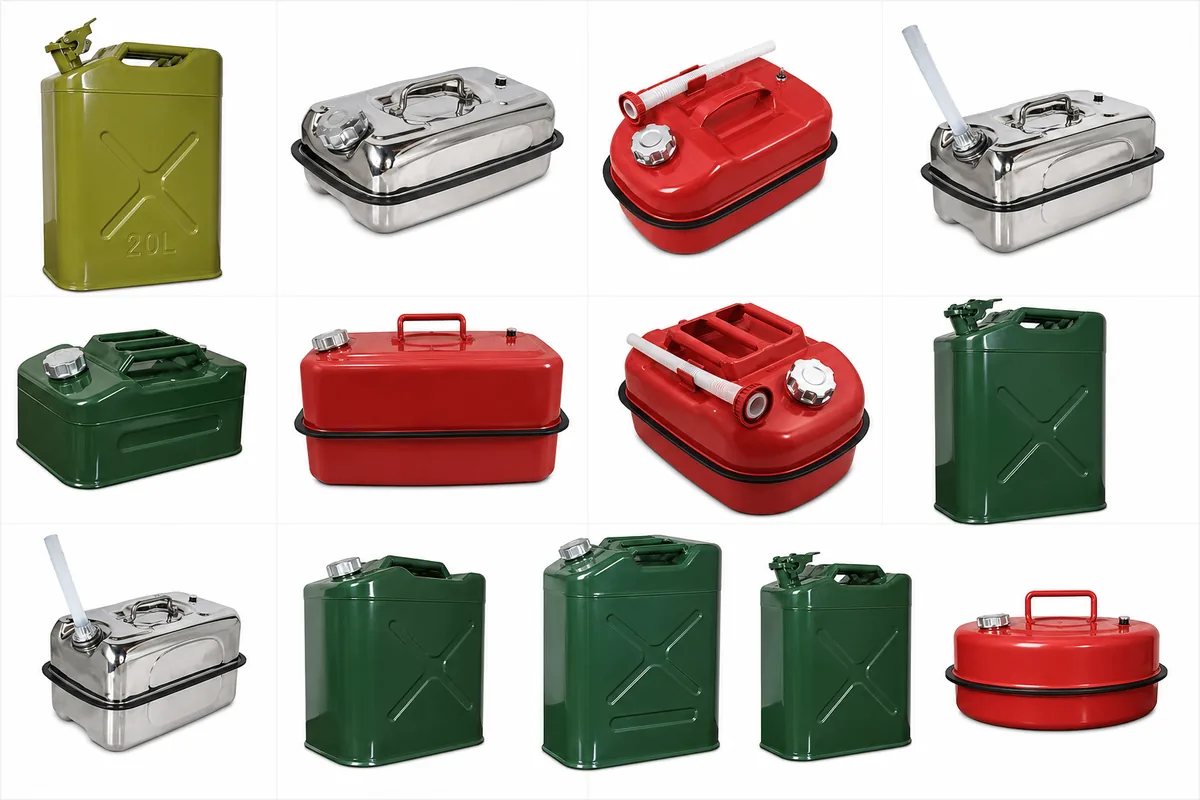
The wrong interior is the most common failure in a cheap jerry can. Work these six questions in order and you arrive at a specification that holds your liquid, survives your handling and clears your market, instead of a part number you hope fits.
1. Start with the liquid
The liquid picks the material, and nothing else gets decided until it is settled. Hydrocarbon fuels want galvanized or coated steel, or aluminium where weight is rationed. Potable water and food-grade liquids want stainless steel, because a food claim rests on the metal, not a coating. Industrial chemicals want HDPE, confirmed against a compatibility check for that exact liquid. DEF wants its own dedicated container, because it contaminates in the wrong one. The single most expensive error in this whole list is putting the right shape around the wrong interior, so read the compatibility guide before you think about anything else.
2. Size for the filled weight, not the volume
Twenty litres of water weighs twenty kilograms before you count the can, and twenty litres of fuel is not far off. The practical limit for one person carrying over any distance is closer to ten. Size the can to who lifts it and how far they carry it, not to the volume that looks efficient on a pallet. A 20L can that never gets lifted full is fine; a 20L can a worker hauls across a site all day is a strain and a spill risk. Our sizing calculator turns a headcount or a refuelling interval into a quantity and a can size.
3. Choose the form
Shape follows stowage. The NATO upright pattern stacks, and its external geometry seats in the carriers, racks and holders the world already owns, so it is the safe default when the can rides in standard mounts. A horizontal, low-profile can is the answer when an upright has nowhere to go: under a boat seat, into a vehicle locker, onto a machine frame. Decide where the can is stored before you decide its shape, because a can that does not fit the space does not get used.
4. Choose the closure and dispensing
The closure is how the liquid leaves the can, and it earns more thought than it usually gets. A vented screw cap carries, pours, and manages the pressure change that comes with temperature. A pouring or misfuelling-resistant spout directs the stream into a filler neck and cuts spillage. A tap lets you draw from a can that stays put, which is what a workshop or a dispensing point wants. For fuel sold into the US the closure also carries most of the compliance load, so it is not a detail to leave to the factory’s default.
5. Confirm compliance for your market
Compliance is far cheaper to design in than to bolt on. A fuel or chemical container needs a UN packaging code for transport. A fuel can sold in the US also needs EPA and CARB compliance, most of it living in the spout and cap. A water or food can needs food-contact documentation. Settle all of this before tooling, because a certification requirement discovered after the mould is cut is an expensive redesign. See UN packaging codes, EPA and CARB compliance and dangerous goods transport.
6. Decide on branding
If the can carries your mark, decide at the start, not as an afterthought. Marking is laser-etched or embossed into a metal body, or moulded and coloured into a plastic one, and either way it sets a minimum order quantity. Folding private label into the first order is far cheaper than adding it to a second run. Settle the colourway and the mark placement now.
Then bring us the six answers
With those six settled we return a specification sheet, a carton and container breakdown and a quotation, instead of a long back-and-forth. If you are earlier than that, browse the range by the job the can does, or work through the Knowledge Centre from the material up.
Match the can to the job
Six answers, one specification. Here is where the line lands.
| Your use case | Recommended can | Why this one |
|---|---|---|
| Hydrocarbon fuels | 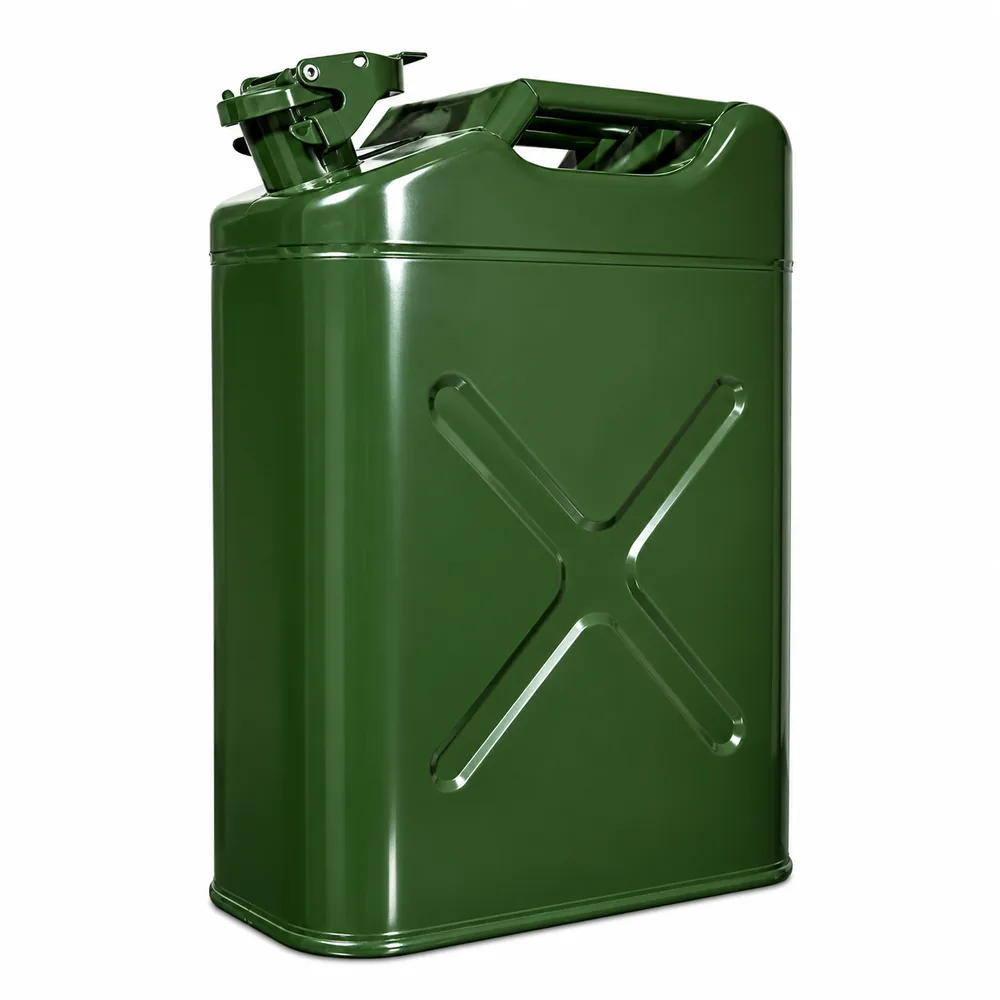 20L NATO Steel Fuel Can 20L NATO Steel Fuel Can |
Coated steel, UN-marked NATO can. |
| Potable water and food | 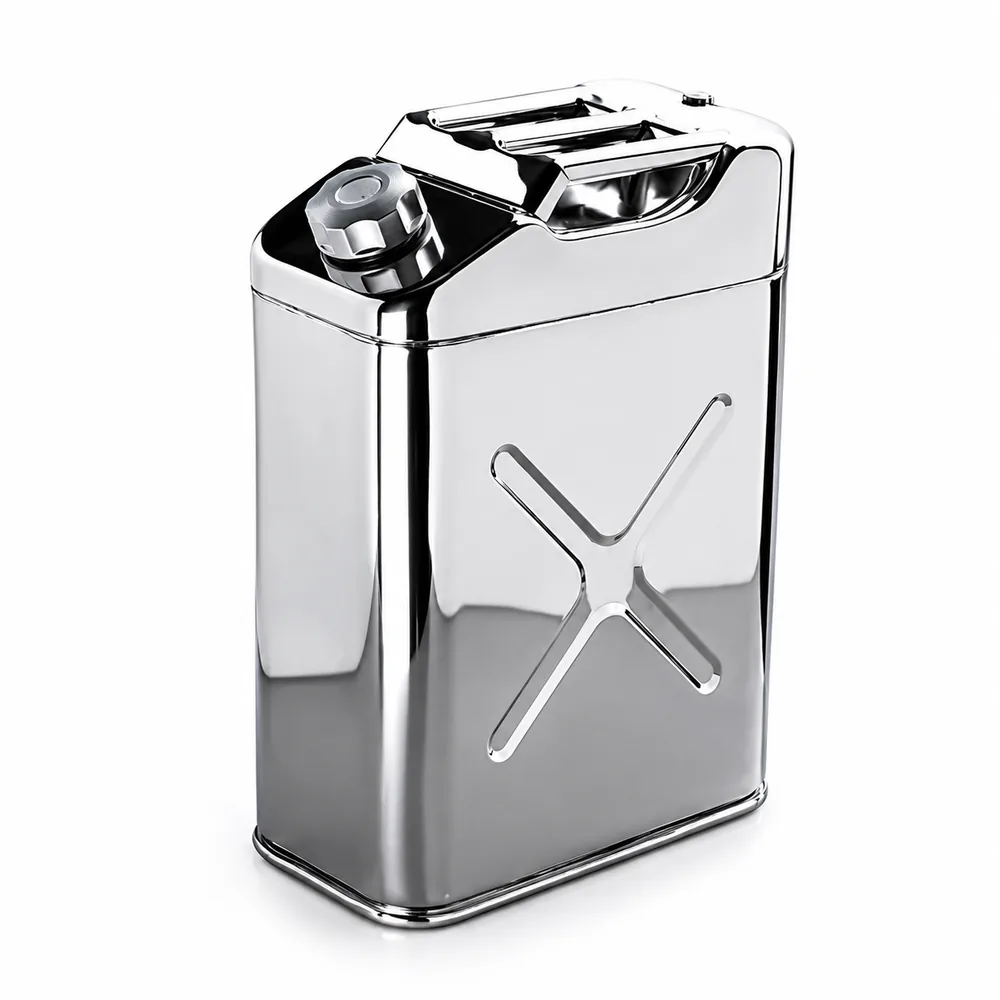 20L Stainless Steel Water Can 20L Stainless Steel Water Can |
AISI 304 across the wetted path. |
| Industrial chemicals | 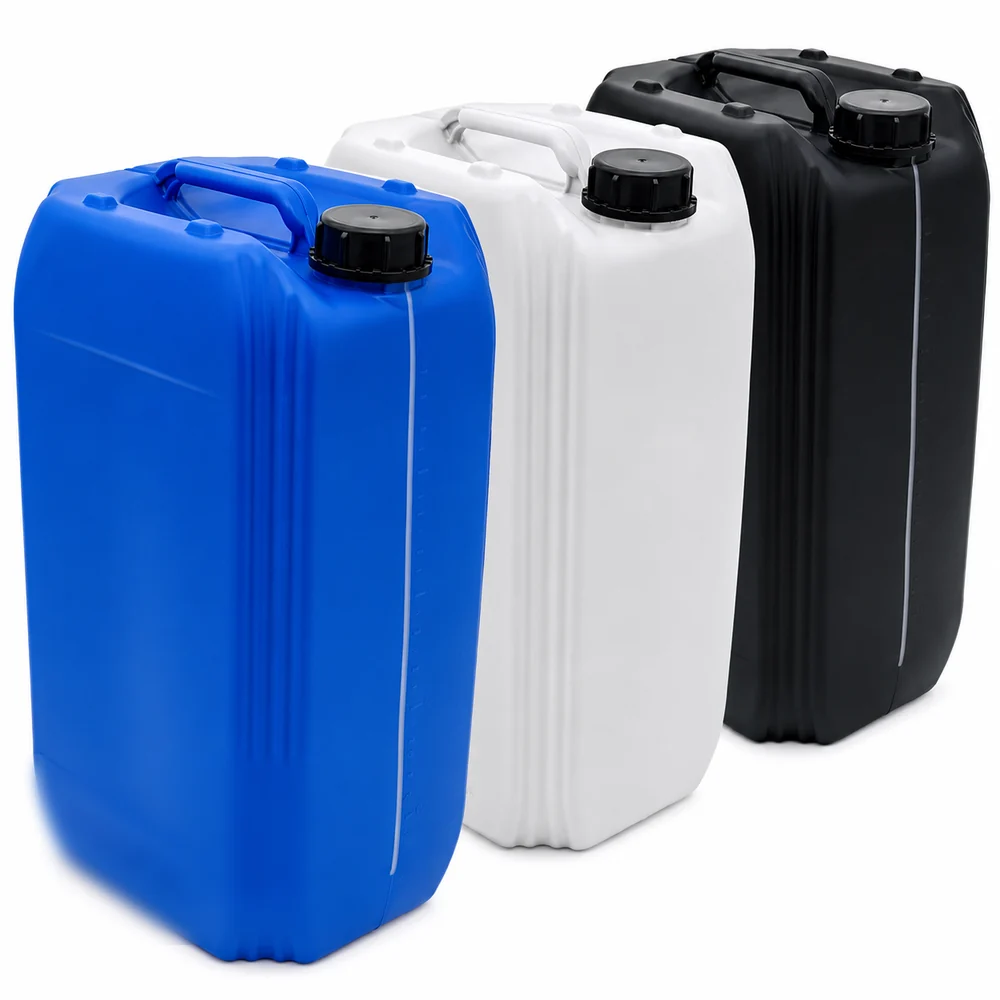 25L Stackable Plastic Jerrycan 25L Stackable Plastic Jerrycan |
UN-rated HDPE, confirm compatibility. |
| Fuel, weight-critical |  20L Aluminium NATO Can 20L Aluminium NATO Can |
The pattern at lower filled weight. |
| DEF / AdBlue | 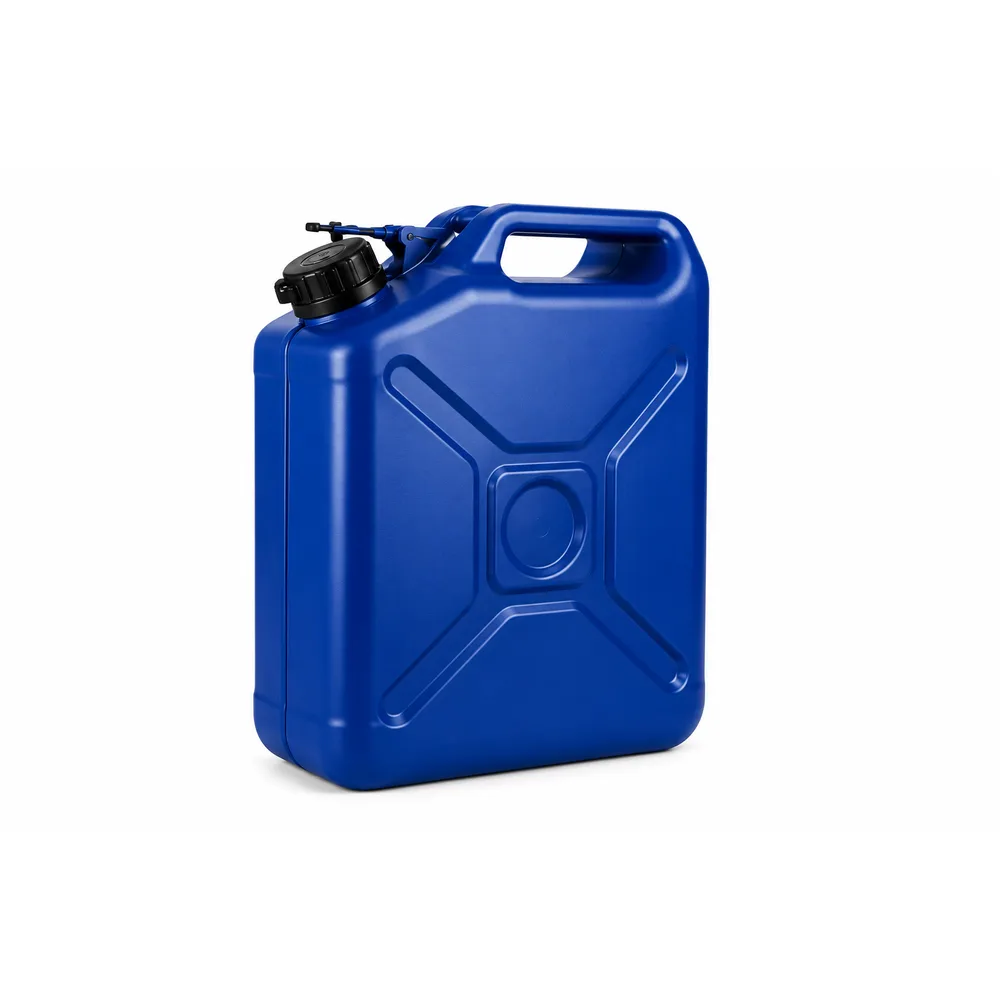 DEF Can — Diesel Exhaust Fluid DEF Can — Diesel Exhaust Fluid |
A dedicated, compatible container. |