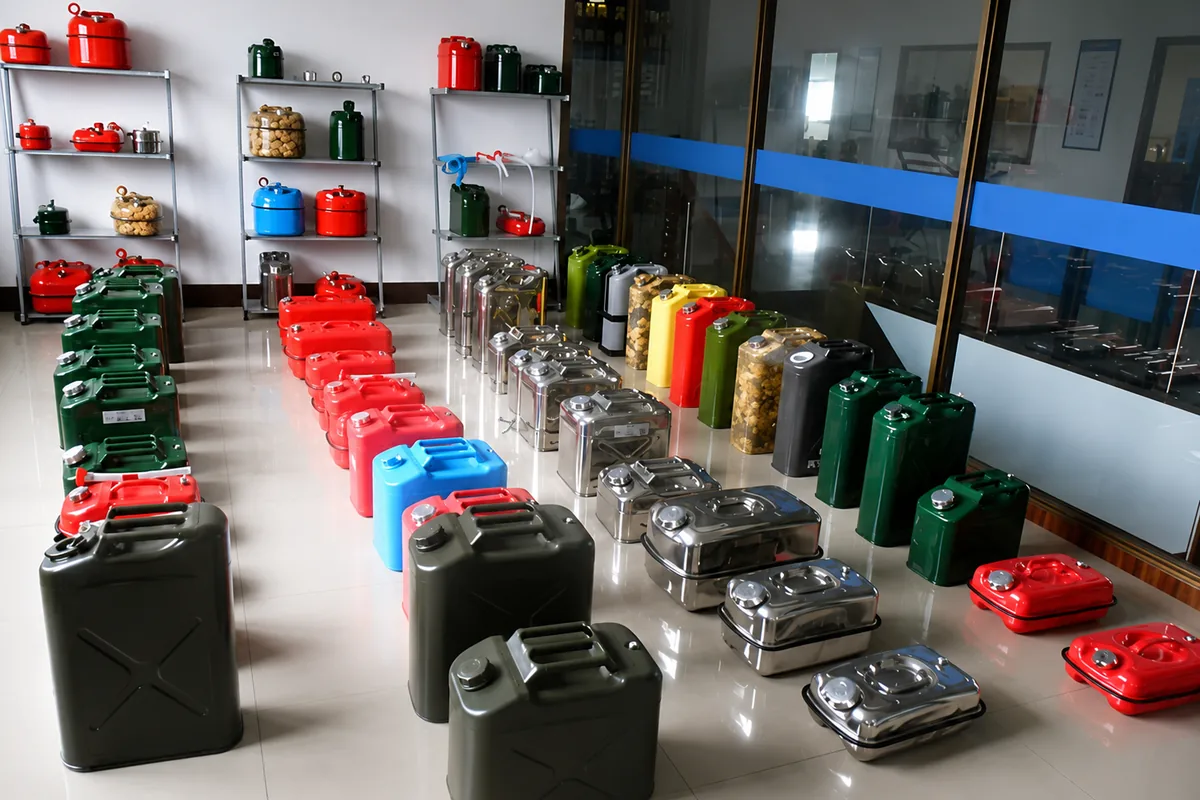
The container fails when the material meets a liquid it cannot handle. This guide matches the four materials we build in against the liquids buyers ask about. Treat it as a starting point, and confirm your exact liquid, its concentration and its temperature before you order.
The four materials, in one line each
- Galvanized or coated steel — hydrocarbon fuels. The zinc coating resists corrosion but reacts with acids and alkalis, and steel is not for food or drinking water.
- Stainless steel, AISI 304 — potable water, food-grade liquids and oils. Food-safe, cleanable, reusable. Not for strong acids such as concentrated hydrochloric acid.
- HDPE — a wide range of industrial chemicals, acids and alkalis, subject to a compatibility check. Fuel grades need fluorination to control permeation. Some grades are food-grade.
- Aluminium — light fuels where weight is the priority. Not for acids or general chemicals.
Material against liquid class
Yes means generally suitable. Check means it depends on the specific liquid, concentration and temperature, so ask us for a compatibility check. No means the wrong material.
| Liquid class | Galv. steel | Stainless 304 | HDPE | Aluminium |
|---|---|---|---|---|
| Petrol, diesel, kerosene, JP-08 | Yes | Yes | Fluorinated | Yes |
| Potable water, food liquids | No | Yes | Food-grade only | No |
| Engine and lubricating oils | Check | Yes | Yes | Check |
| Acids and alkalis | No | Check | Check | No |
| Solvents and coatings | Check | Check | Check | No |
| DEF / AdBlue (urea) | No | Check | Dedicated DEF | No |
Why permeation and reaction matter
Two failure modes drive most of this table. Reaction: acids and alkalis attack the zinc on galvanized steel and can pit some metals, so the aggressive-chemical column belongs to plastic and, for milder cases, stainless. Permeation: hydrocarbons migrate slowly through untreated plastic, which loses product and breaches fuel-emissions rules, so a plastic fuel can is fluorinated and a steel can is not.
Concentration and temperature move the line
A “yes” and a “no” in that table are really the ends of a range. A material that holds a dilute acid at room temperature can fail against the same acid concentrated, or hot. Heat speeds up almost every attack and every permeation rate, and a can that sits in the sun runs warmer than the liquid went in. So a compatibility answer is only as good as the numbers behind it: the concentration and the service temperature, not just the chemical’s name.
The seal fails before the wall
The body is rarely the first thing to go. The gasket, the cap liner and any O-ring in a tap are elastomers, and elastomers have their own, narrower compatibility. A liquid the HDPE wall shrugs off can swell or harden the seal, and a swollen seal leaks or seizes. When you specify a can for anything aggressive, the closure material matters as much as the body, and the seal is the part a cheap can gets wrong.
What a compatibility check needs from you
Send us the exact liquid by name, its concentration, its temperature in service, and how long it will sit in the container. With those four facts we confirm the material, the closure and any interior treatment, or we tell you plainly that we do not have a safe option.
Where this maps to our range
Fuels sit in the fuel and gas cans range, water and food in the water and food-grade range, and chemicals in the industrial and chemical range. This guide is general information, not a warranty of fitness for a specific use.
Match the can to the job
Four materials, matched to the liquid. Here is the line.
| Your use case | Recommended can | Why this one |
|---|---|---|
| Petrol, diesel, kerosene, JP-08 | 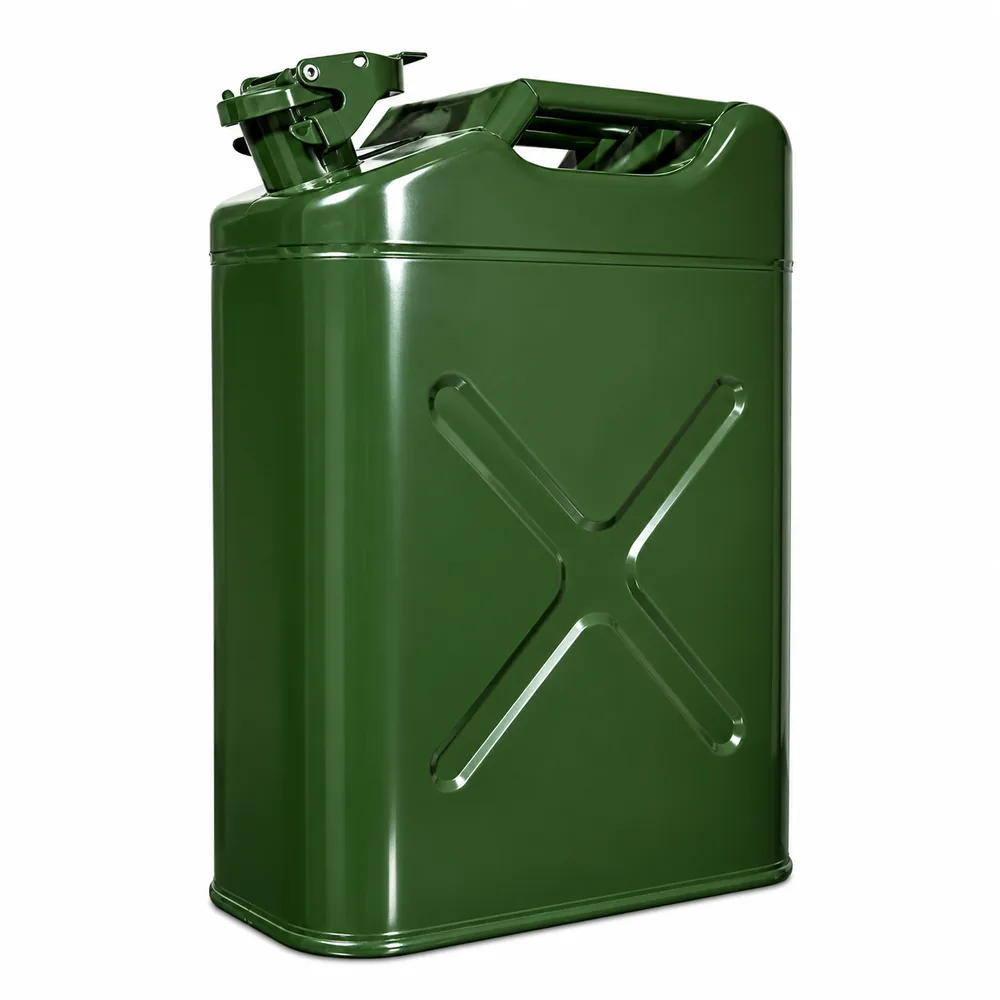 20L NATO Steel Fuel Can 20L NATO Steel Fuel Can |
Coated steel for hydrocarbons. |
| Potable water, food, oils | 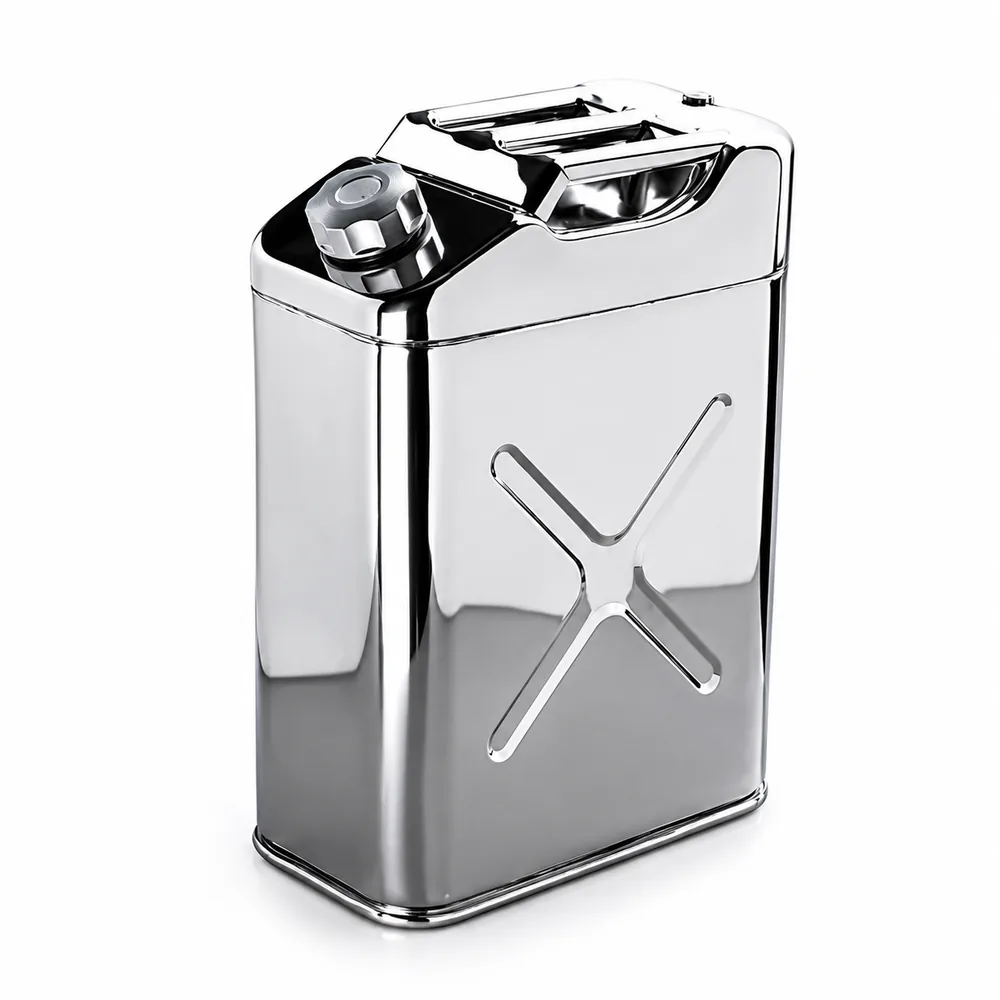 20L Stainless Steel Water Can 20L Stainless Steel Water Can |
AISI 304 food-grade stainless. |
| Chemicals, acids, alkalis | 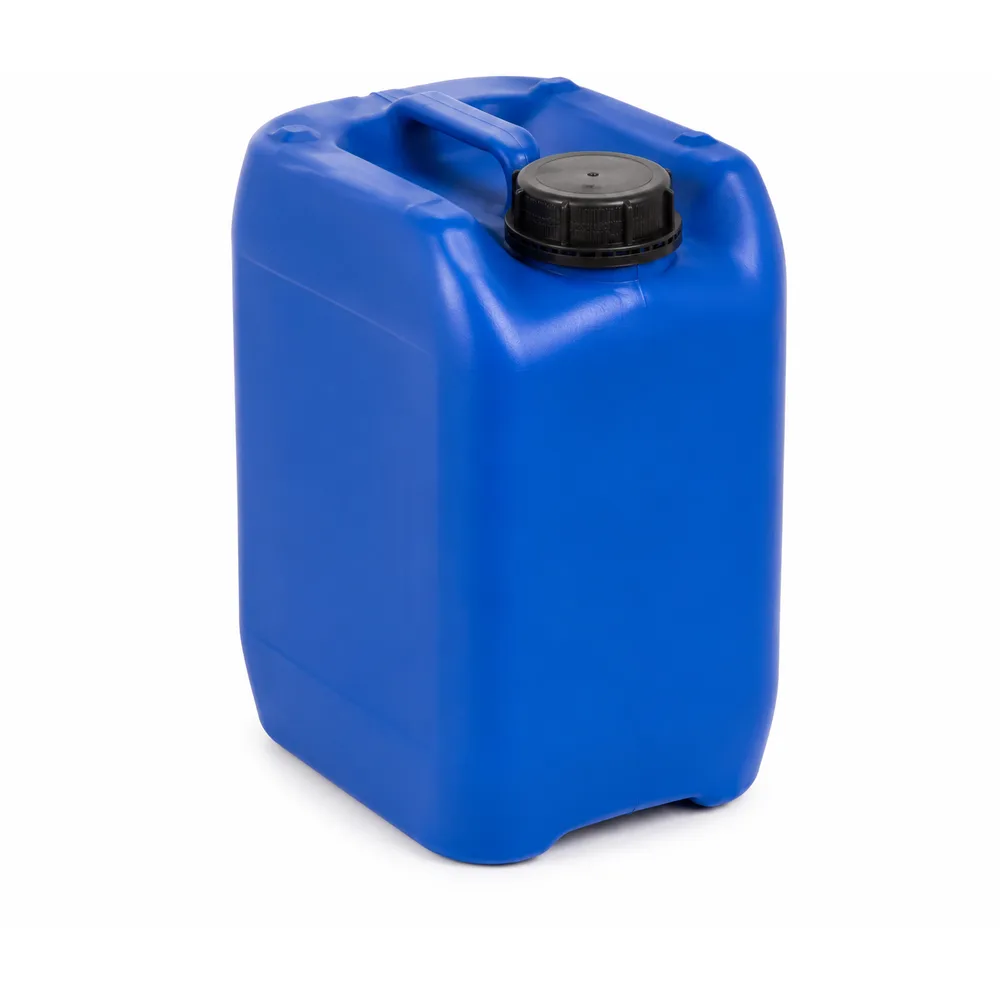 Fluorinated HDPE Jerrycan Fluorinated HDPE Jerrycan |
HDPE, confirmed on a compatibility check. |
| Light fuels, weight-critical | 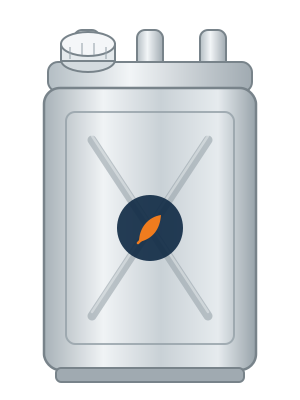 20L Aluminium NATO Can 20L Aluminium NATO Can |
Aluminium, not for acids or chemicals. |