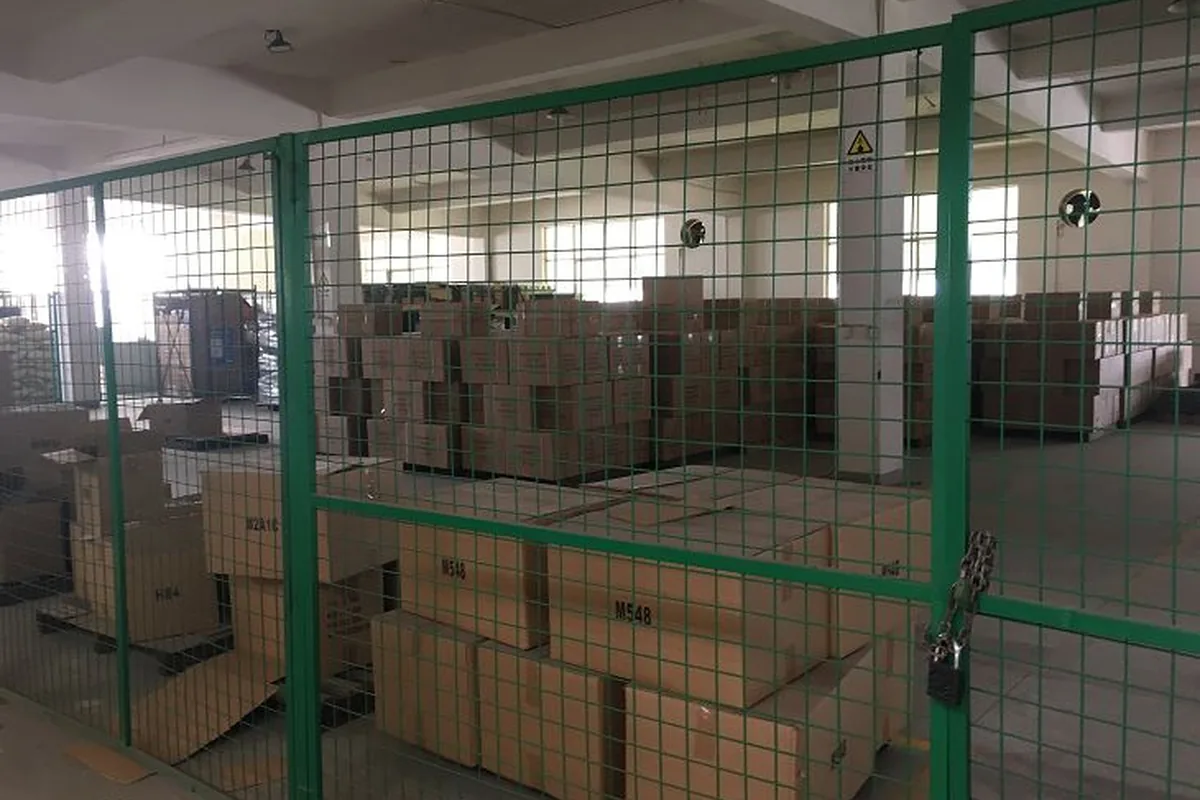
A container that passes its own tests is only half the job. Moving a hazardous liquid legally means classifying the goods and meeting the transport rules for the mode you ship by. This is background to plan around, not a compliance ruling, so confirm the rules for your exact liquid and route before you book.
Classify the goods first
Everything downstream flows from the classification. Each hazardous liquid has a UN number, a four-digit identifier such as UN 1203 for petrol, and a hazard class. Fuels are Class 3, flammable liquids. Acids and alkalis are usually Class 8, corrosive, and some liquids carry a subsidiary hazard as well. Get the UN number and class right and the rest of the requirements fall out of them. Get them wrong and every document after is wrong too.
Packing groups set the performance bar
Within a class, a packing group grades the danger: Packing Group I is high, II is medium, III is low. Most fuels sit in II or III. The packing group is not paperwork for its own sake. It sets the performance the packaging must prove, and it ties directly to the UN packaging code stamped on the container, whose X, Y or Z rating states which groups it covers. Match the two: a Y-rated can covers Groups II and III, a Z-rated can covers III only.
The rules change with the mode
- Road: ADR across Europe, with equivalent national frameworks elsewhere, for example 49 CFR in the United States.
- Sea: the IMDG Code.
- Air: the IATA Dangerous Goods Regulations, built on the ICAO Technical Instructions, the strictest of the three and with the tightest quantity limits.
Each sets its own packaging, marking, labelling and documentation rules for the class and packing group. A shipment that is legal by road is not automatically legal by air.
Limited and excepted quantities
Small volumes can qualify for relief. Limited Quantity (LQ) and Excepted Quantity (EQ) provisions ease some marking and documentation when the fuel travels in small inner packagings within set limits. Whether your load qualifies depends on the liquid, the pack size and the mode, so it is worth asking, because it can simplify a shipment that looks fully regulated at first glance.
Where the container fits
The container’s job in all of this is to carry a valid UN packaging code, proving it passed the drop, stack, leakproof and pressure tests for its packing group. That stamped code is what a carrier and a customs officer check. It does not classify your goods or write your paperwork; it evidences that the packaging is fit for the danger. Our guide to UN packaging codes shows how to read the marking.
What a shipper actually needs
To move a hazardous liquid you need three things lined up: correctly UN-coded packaging at the right packing group, the marks and labels the mode requires, and a dangerous-goods declaration for the consignment. Trained staff have to prepare it, and a carrier can refuse a load that is short on any one. Confirm your liquid’s classification and your route’s rules before you book the freight, not at the dock.
Match the can to the job
The UN code is what a carrier checks. Here is the coded line.
| Your use case | Recommended can | Why this one |
|---|---|---|
| Fuel, UN 3A1 | 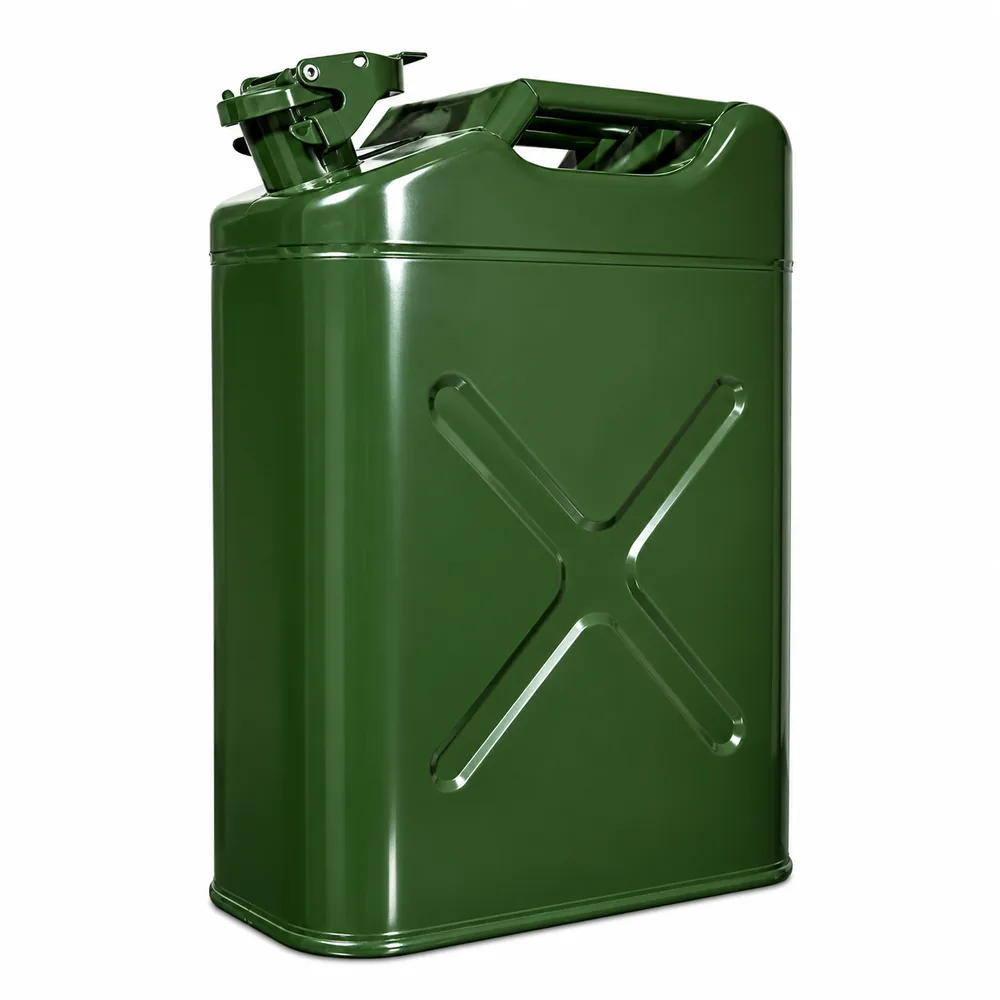 20L NATO Steel Fuel Can 20L NATO Steel Fuel Can |
Steel jerry can, UN-marked for transport. |
| Chemicals, UN 3H1 | 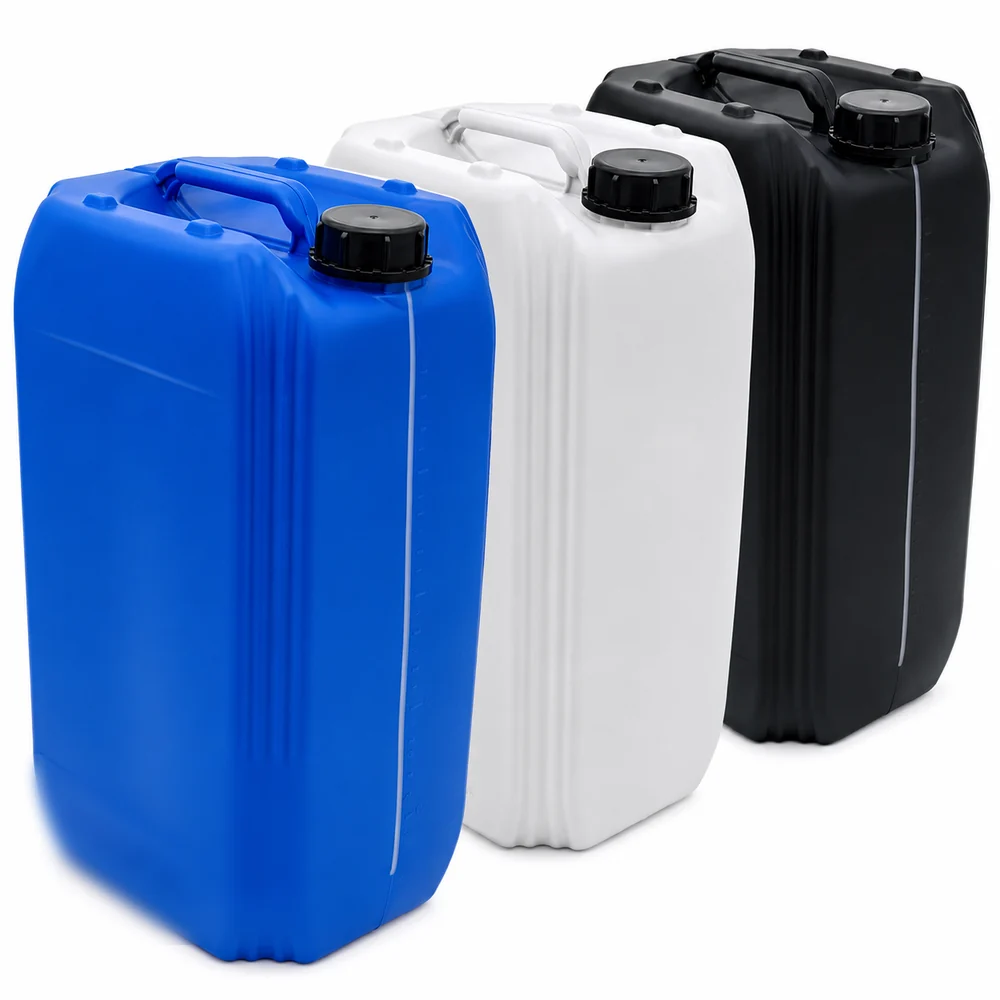 25L Stackable Plastic Jerrycan 25L Stackable Plastic Jerrycan |
HDPE jerrycan, approval per design. |
| Fuel in plastic | 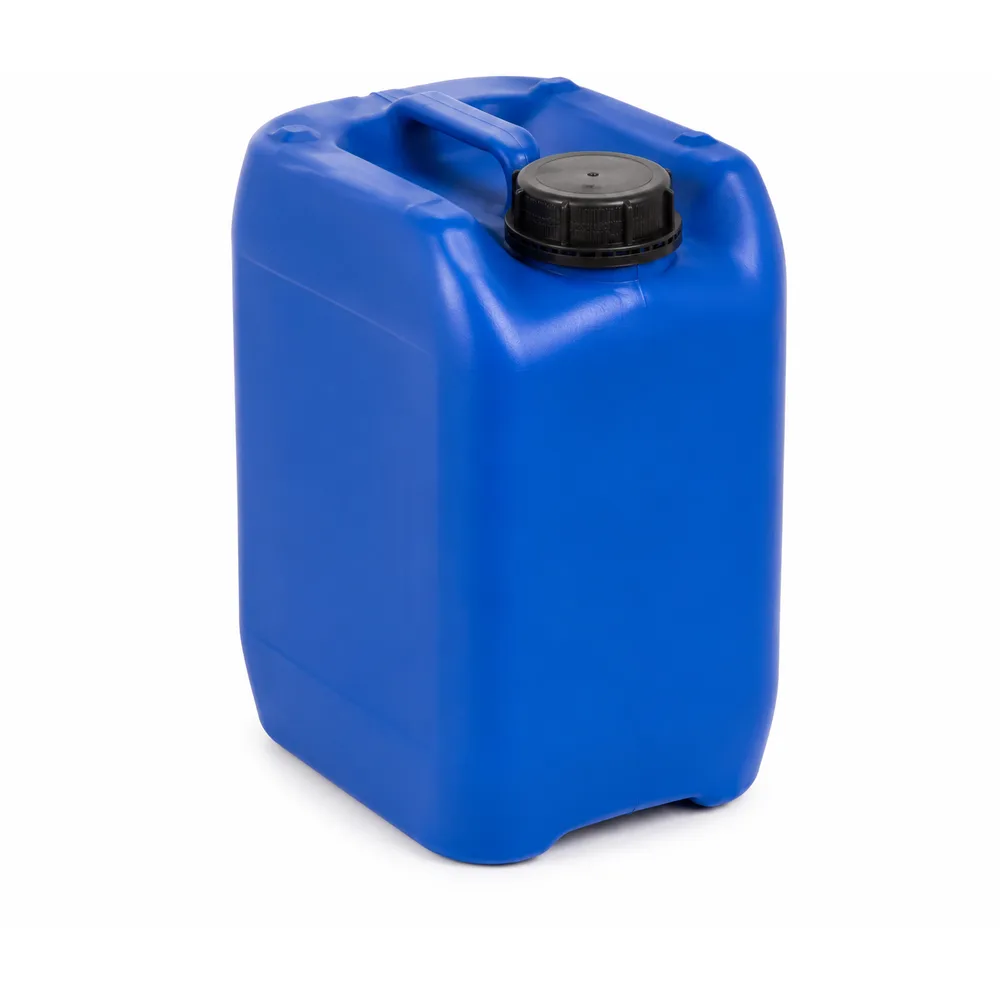 Fluorinated HDPE Jerrycan Fluorinated HDPE Jerrycan |
Fluorinated HDPE, low permeation. |
| Fuel, UN 3B1 |  20L Aluminium NATO Can 20L Aluminium NATO Can |
Aluminium jerry can, weight-critical. |