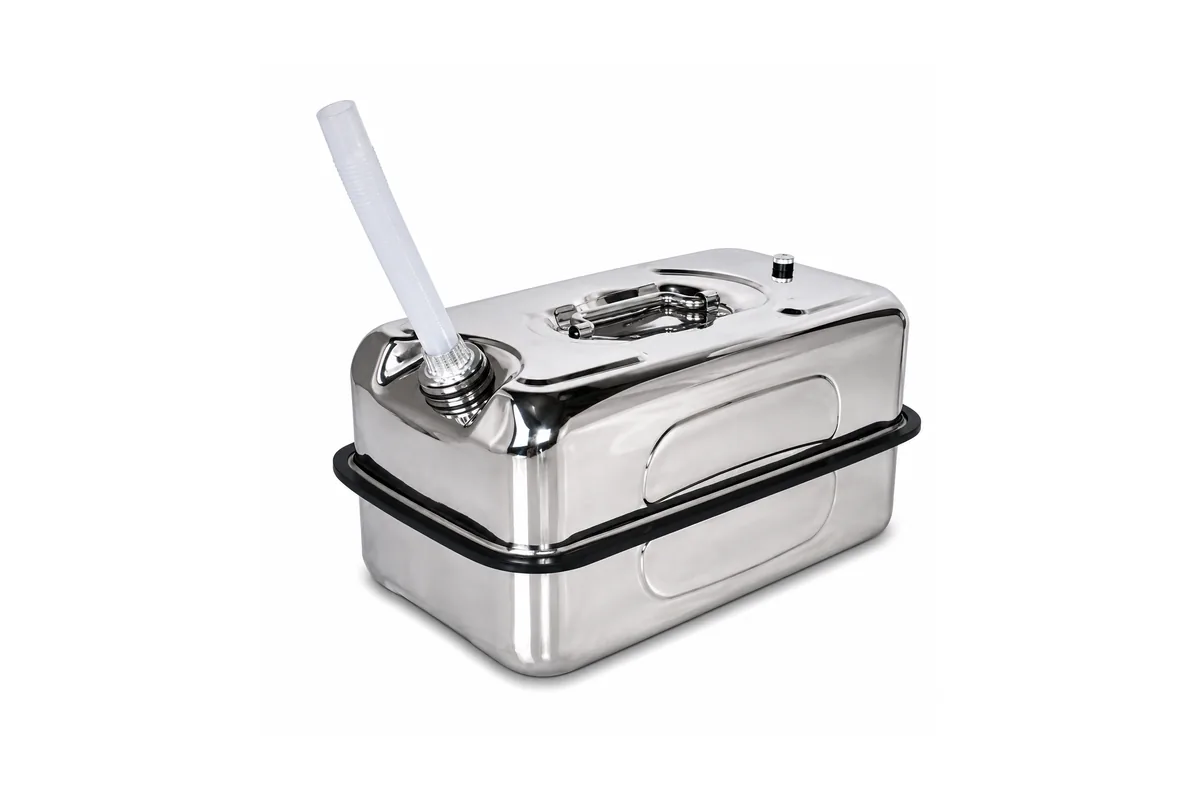
304 and 316 look identical, take the same polish and both resist rust. One alloying element separates them, and it decides how the can behaves the day it meets salt or acid. Get that one call right and the container lasts for years. Get it wrong and it pits.
The difference is molybdenum, and here is what it buys
Both are austenitic stainless steels: roughly 18% chromium and 8% nickel, the alloy most people mean when they say “stainless”. 316 adds two to three percent molybdenum. Molybdenum is what lifts the metal’s resistance to chloride pitting, the localised corrosion that starts as a pinhole and eats straight through a wall. Metallurgists put a number on it, the Pitting Resistance Equivalent Number, PREN = %Cr + 3.3×%Mo + 16×%N. Plain 304 sits around 18 to 20. 316 sits around 24 to 26. That gap is the whole reason 316 exists, and the whole reason it costs more.
When 304 is the right answer, not a compromise
For potable water, food-grade liquids and general indoor or sheltered use, 304 is the correct grade. It is food-safe, it cleans easily, it takes years of refilling, and it resists corrosion in any normal water. Reaching for 316 here is money spent on protection the job never calls on. Most water and food cans should be 304, and ours are.
When to step up to 316
Chloride is the trigger. Coastal and marine air carries salt, salt itself is chloride, and a long list of industrial chemicals bring chloride with them. In those conditions 304 can pit where 316 holds. So the classic 316 cases are a can that lives on or near the sea, a wash-down regime that uses chlorinated cleaners, or a chemical that 304 cannot take. If the environment is salty or the liquid is aggressive, the molybdenum earns its premium.
The mistake buyers make in both directions
Two errors, equal and opposite. One is buying 316 “to be safe” for indoor potable water, where 304 would have done the identical job for less. The other is buying 304 for a coastal or chloride-heavy job to shave a little cost, then watching it pit inside a season. Neither is a stainless problem. Both are a specification problem. Name the environment and the liquid, and the grade stops being a guess.
A note on welding and the L grades
Where a can is welded, the heat can leave a standard grade vulnerable to corrosion right at the weld, an effect called sensitisation. The low-carbon variants, 304L and 316L, avoid it, which is why fabricated food and marine vessels are often specified in the L grade. For a jerry can it rarely swings the buying decision, but it is worth recognising the term when a spec sheet uses it.
| Property | 304 | 316 |
|---|---|---|
| Composition | ~18% Cr, 8% Ni | Plus 2–3% Mo |
| PREN (pitting resistance) | ~18–20 | ~24–26 |
| Chloride and salt | Good | Better |
| Acid resistance | Moderate | Higher |
| Food and potable water | Yes | Yes |
| Cost | Lower | Higher |
| Best for | Water, food, general use | Marine, chloride, harsher chemicals |
What Fortitude21 uses, and when we switch
Our stainless water and food-grade cans are AISI 304 across the wetted path, the right grade for potable water and food, with no liner to fail. When your application is marine, coastal or chloride-heavy, tell us and we quote 316 for the same designs. Either way you get the mill certificate for the grade, not a verbal assurance. See the water and food-grade range, and if you are still choosing a material at all, our guide to choosing a jerry can starts one level up.
Match the can to the job
Both grades, matched to the exposure. Here is our stainless line.
| Your use case | Recommended can | Why this one |
|---|---|---|
| Potable water and food, indoors | 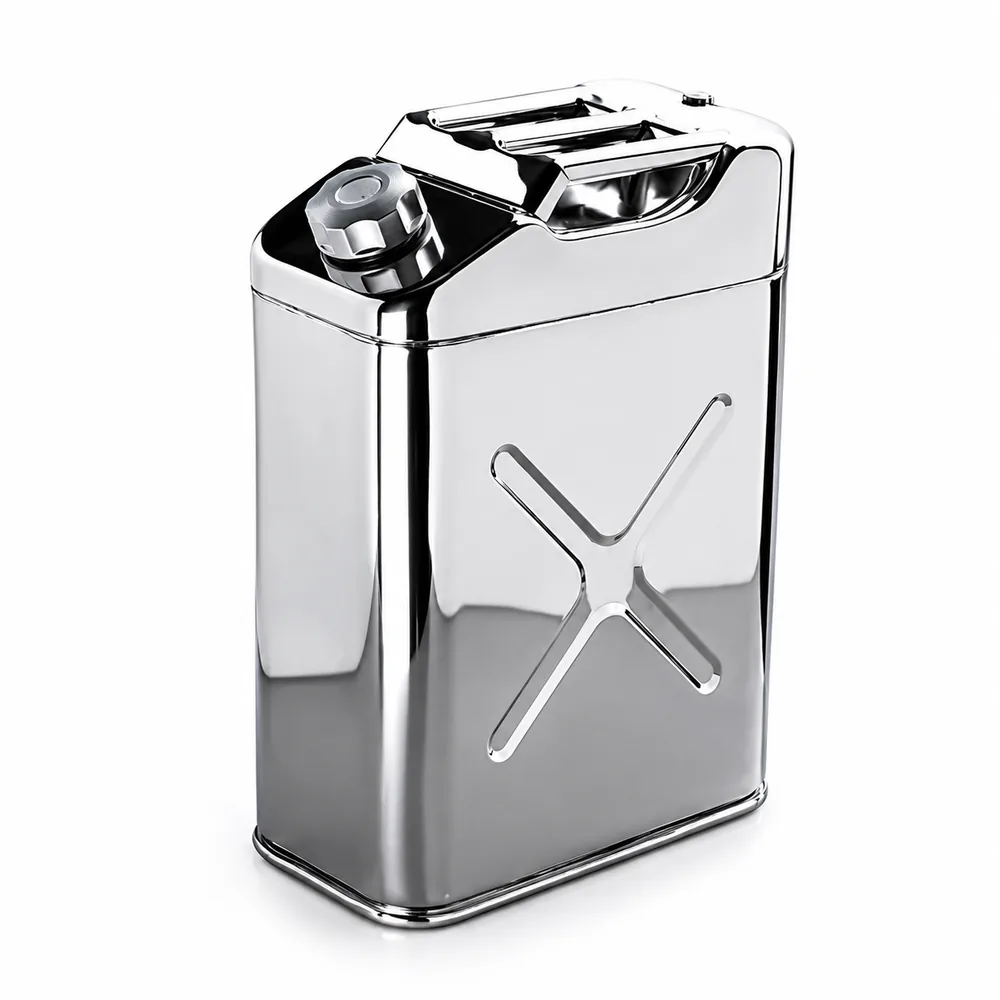 20L Stainless Steel Water Can 20L Stainless Steel Water Can |
AISI 304, the right grade; 316 on request. |
| Water or food, lying flat | 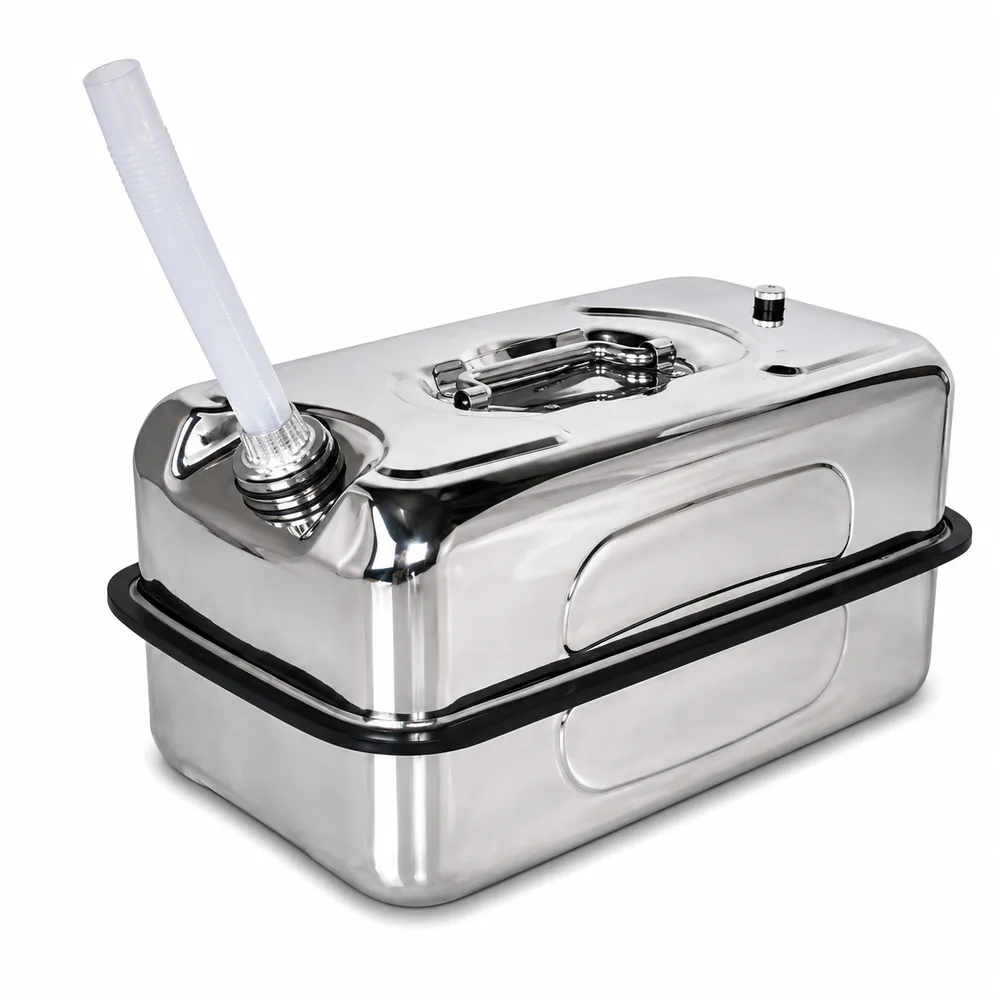 Horizontal Stainless Can — 5L / 10L / 20L Horizontal Stainless Can — 5L / 10L / 20L |
AISI 304 stainless, low-profile. |
| NATO-pattern stainless | 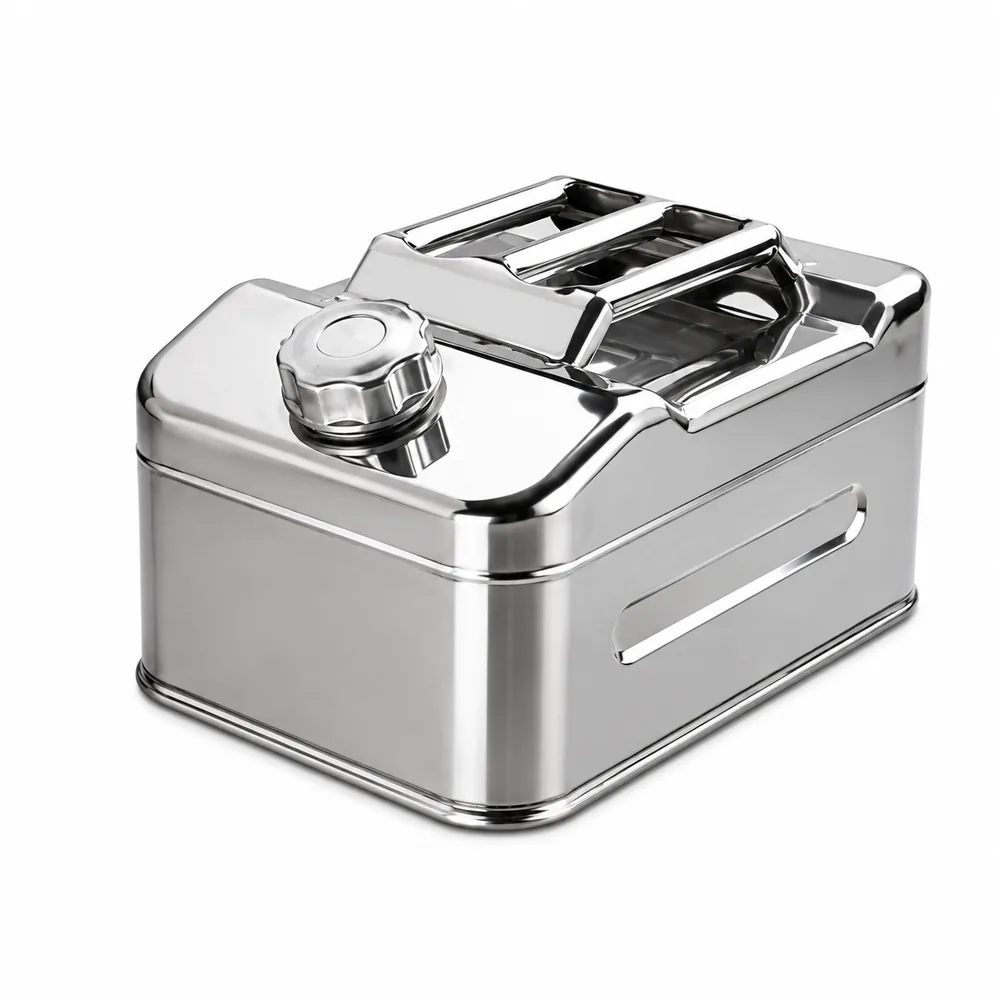 Stainless NATO Can — 10L / 20L Stainless NATO Can — 10L / 20L |
Seats in standard carriers, 304 wetted path. |
| A grab bag or vehicle kit | 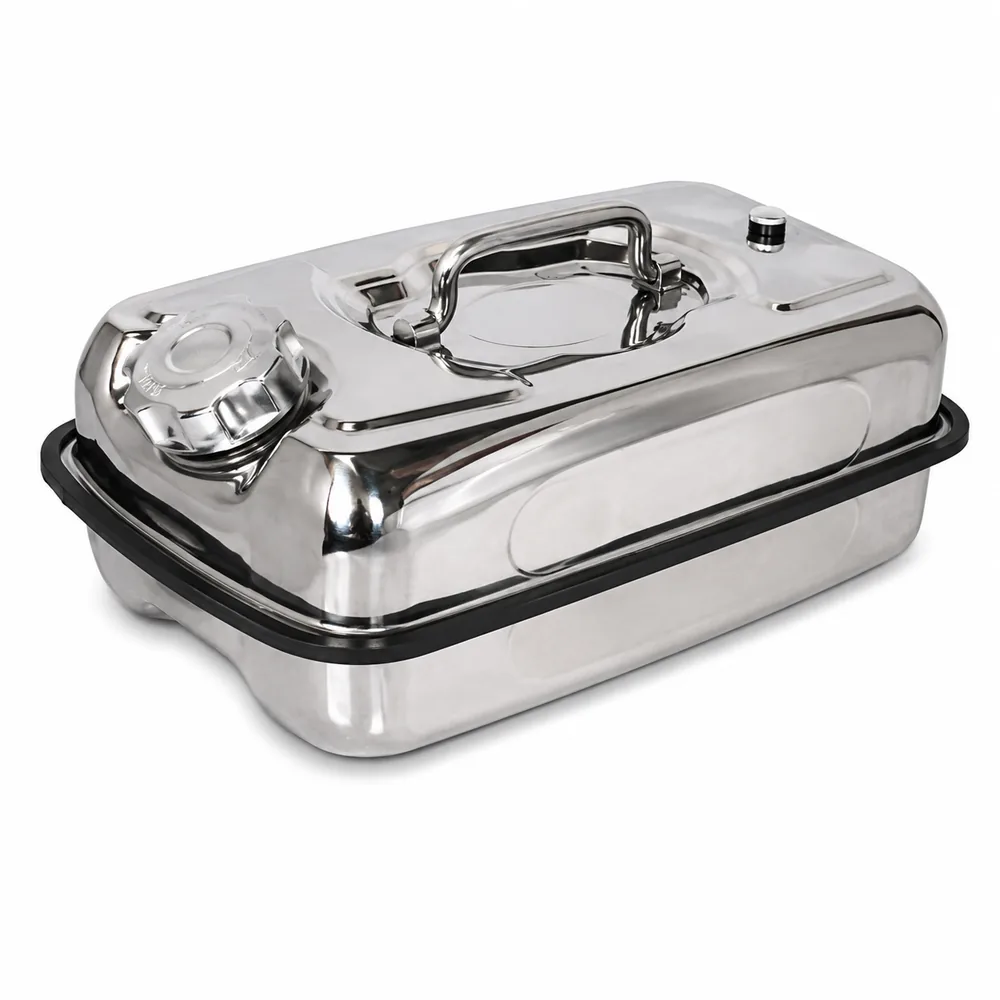 5L Stainless Steel Water Can 5L Stainless Steel Water Can |
A smaller 304 reserve, one-hand carry. |