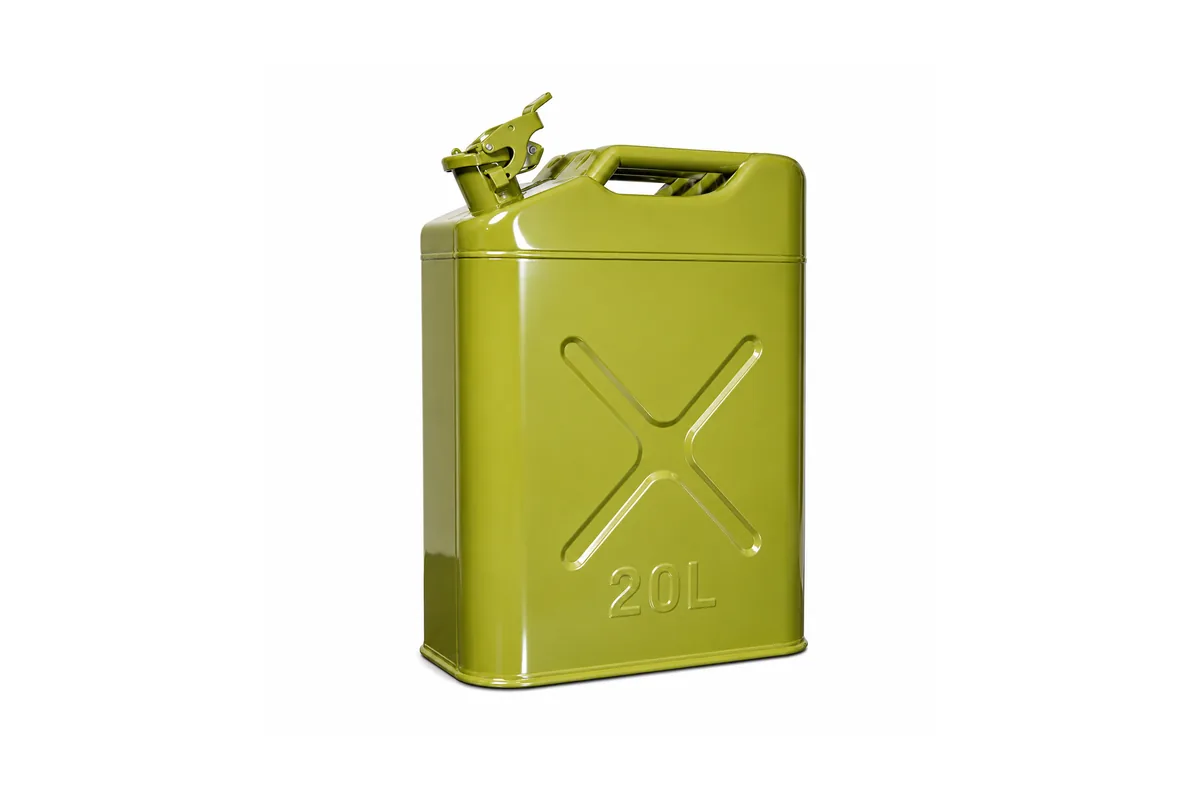
The jerry can is one of the few Second World War designs still made almost unchanged, because the shape solved the problem so completely that improving it means breaking compatibility.
Where the shape came from
German engineers designed the Wehrmacht-Einheitskanister in the 1930s: a 20-litre pressed-steel can with three handles, a cam-lever cap and a stamped cross on each face. Allied forces copied it during the war and named it the jerry can after its origin. The core geometry has barely moved since, because it works. Later national and NATO patterns tightened the dimensions and the cap, but the can a soldier fills today is the can that engineer drew.
Why the pressed cross matters
A flat sheet-metal panel that size wants to flex. Fill it, heat it in the sun, cool it overnight, and the pressure inside rises and falls. A plain wall would bulge out and suck back in, working the metal until it splits at a fold. The stamped cross stiffens each face and gives it a controlled way to move. The panel flexes with the pressure instead of fighting it, so the wall lasts. Sealed fuel builds pressure as it warms, which is why the cap and the vent matter as much as the panel; our note on venting and pressure covers that side.
The three handles, in use
Look at the top and the reason for three handles is loading. Grab the outer two and one person carries a full can in each hand, balanced. Grab the centre handle and two people share a single can, or one person swaps hands without setting it down. Pass cans down a line and each pair of hands takes the grip the last pair just left, so a chain of people moves fuel from a truck to a store without anyone breaking stride.
The recessed handles and the air pocket
The handles sit in a recess pressed into the top of the can, and that recess leaves an air pocket under the cap when the can is full. Two things follow. A filled can floats instead of sinking, which matters at a river crossing or a flooded store. And the trapped air gives the contents somewhere to go when they warm and expand, so the can is never filled solid to the cap. Fill line, breathing room and venting are one system, not three separate details.
Flat, stacking sides
The rectangular profile earns its keep in storage and transport. Flat faces sit against each other with no wasted gap, so a pallet or a vehicle bed holds the most cans in the least space. The straight sides stack square and stay put, and the shape ships and stores the same way whatever the can holds.
STANAG and interchangeability
NATO standardised the external dimensions and the mounting interface, so a can from one maker seats in a carrier, rack or holder from another. That is the practical value of the pattern to a distributor: the accessory ecosystem is shared. A NATO-pattern can and a NATO-pattern holder fit, whoever made each, and the same goes for the wider range of holders and accessories built to the pattern.
The pattern is a shape, not a material
Fortitude21 builds the pattern in pressed steel for fuel, in AISI 304 stainless for water and food, and in aluminium where weight is the constraint. The external form stays constant so carriers stay compatible; the interior is chosen for what the can holds. A customer can standardise on one set of racks and run steel, stainless and aluminium cans through them.
A common mistake to avoid
Watch for a "jerry-style" can that copies the look but not the dimensions. It carries fuel or water as well as any other can, but it will not seat in a NATO holder, so the racks and carriers your customer already owns are stranded. Check that a can is built to the pattern, not just shaped like it, before it ships against existing mounting hardware.
What this means when you buy
If your customers already own jerry can holders and racks, a NATO-pattern can drops into them, so an upgrade needs no new mounting hardware. Browse the fuel and water ranges.
Match the can to the job
One shape, three interiors. Here is the pattern across our line.
| Your use case | Recommended can | Why this one |
|---|---|---|
| The pattern in steel, for fuel | 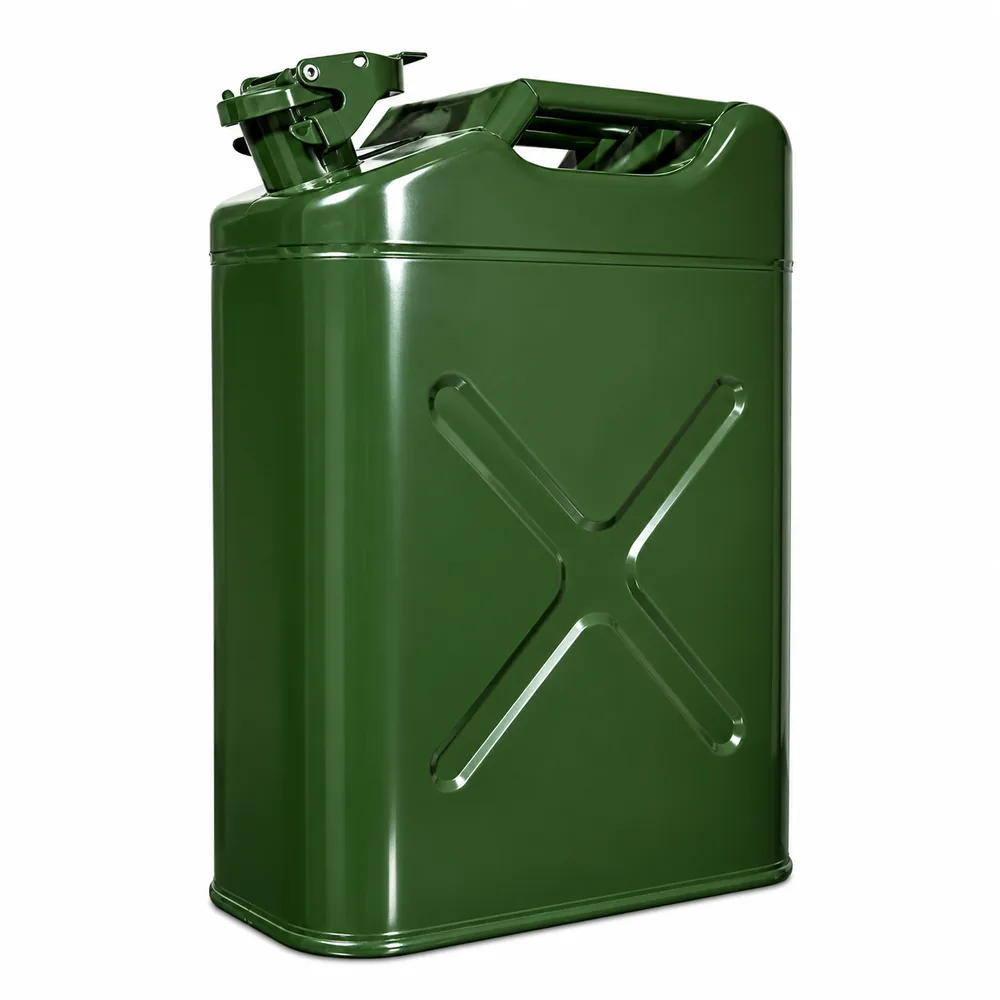 20L NATO Steel Fuel Can 20L NATO Steel Fuel Can |
Coated pressed steel, UN-marked. |
| The pattern in stainless, for water | 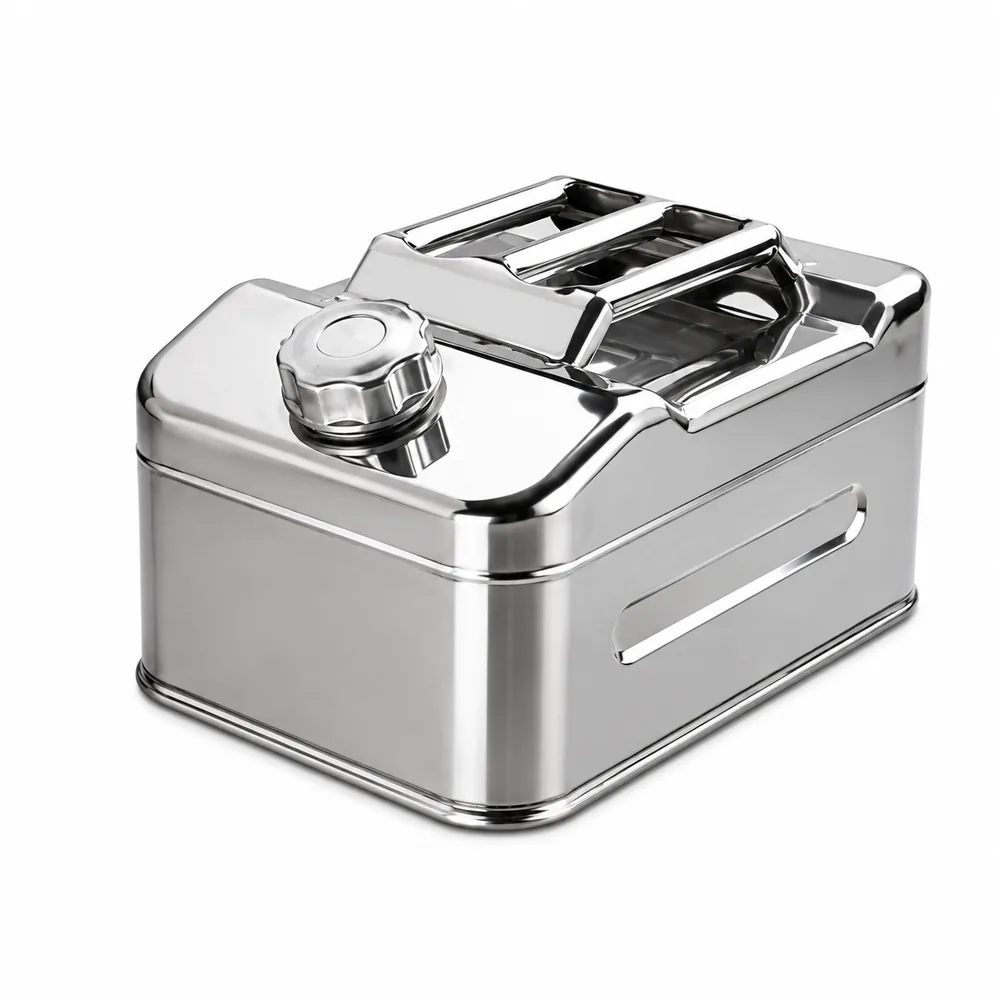 Stainless NATO Can — 10L / 20L Stainless NATO Can — 10L / 20L |
AISI 304 across the wetted path. |
| The pattern in aluminium |  20L Aluminium NATO Can 20L Aluminium NATO Can |
Same geometry, lower filled weight. |
| Mounting to the pattern | 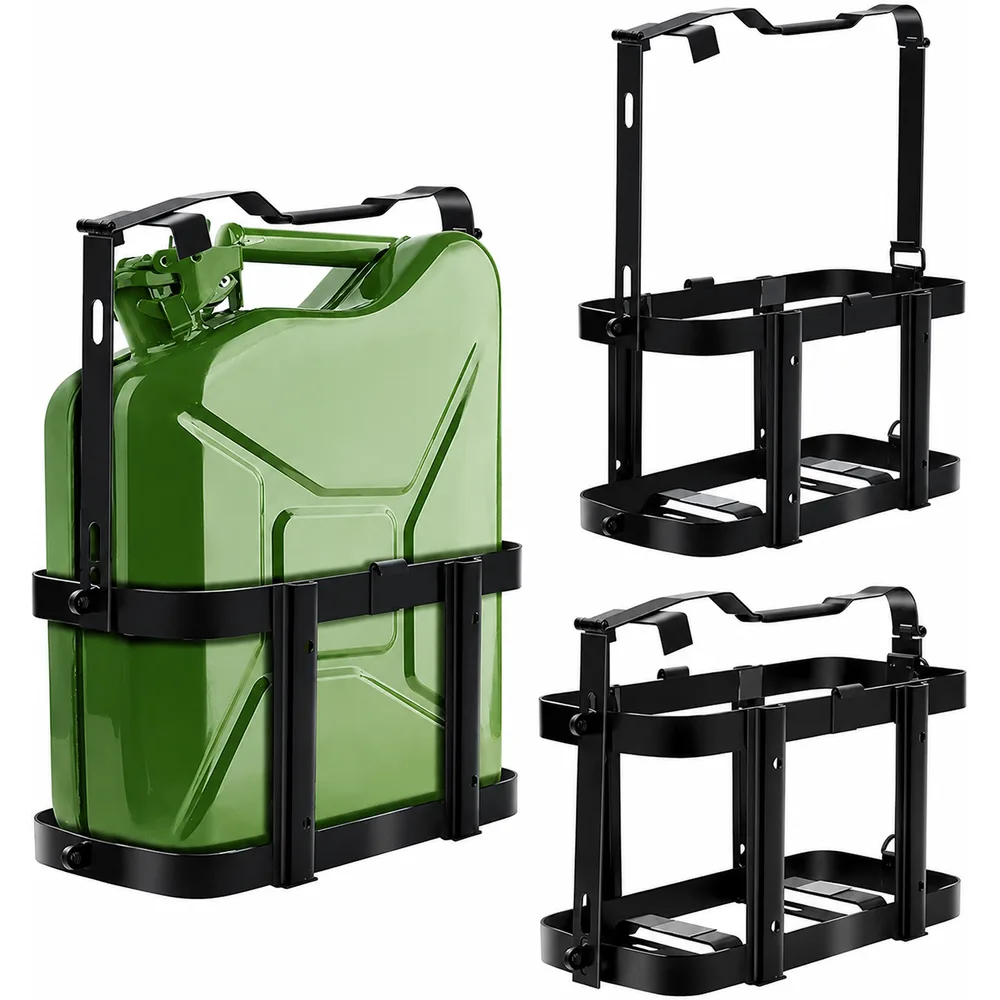 Jerry Can Holders & Mounts Jerry Can Holders & Mounts |
Holders that fit any NATO-pattern can. |