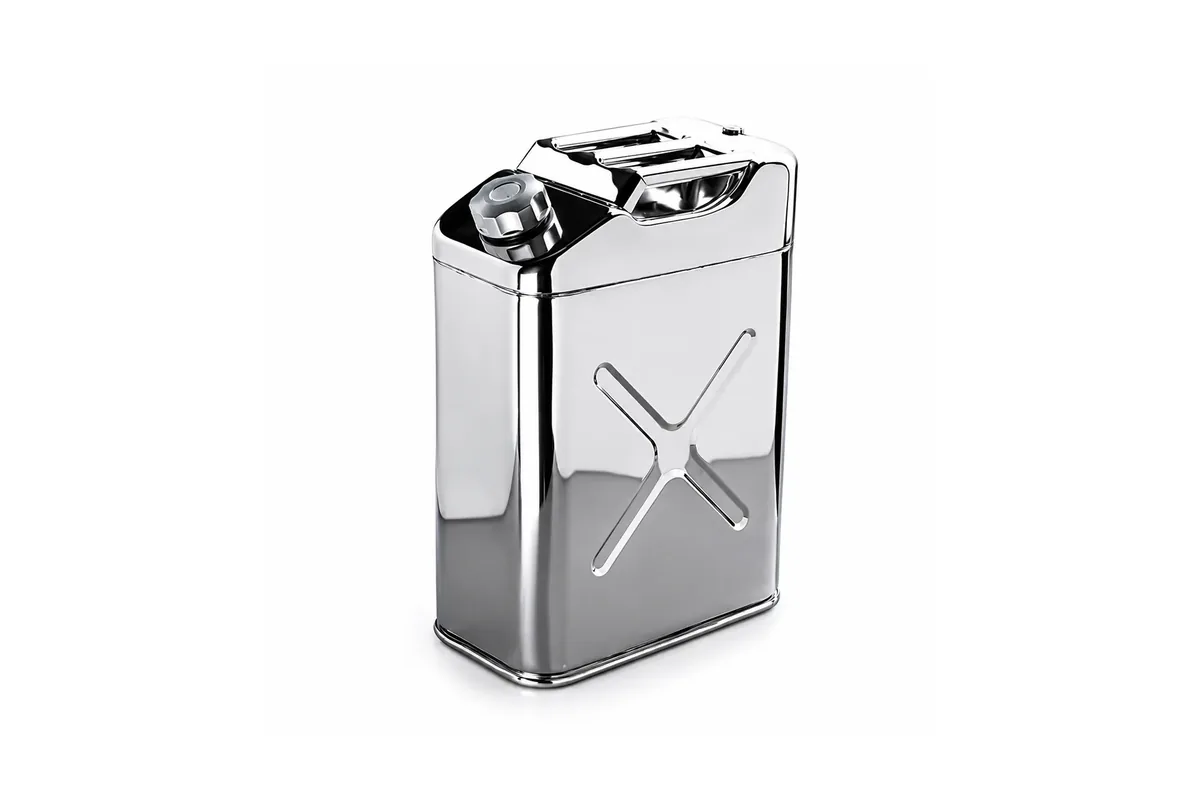
Water planning is simple arithmetic and one material decision. This sets out the common planning figures and why the container matters as much as the volume.
How much to store
A common planning figure is around four litres per person per day, split between drinking and basic hygiene, with more in hot climates or for medical needs. For a two-week household reserve, that is roughly 56 litres per person. Agencies planning for a population scale the same per-person figure. Use our sizing calculator to turn a headcount into a container count.
Survival minimum versus fuller provision
The four-litre figure is a survival floor: enough to keep a person drinking and washing through a short emergency. Longer displacement needs more. The Sphere Handbook, the reference standard for humanitarian response, plans around 15 litres per person per day to cover drinking, cooking and personal hygiene together. Decide which you are storing for. A three-day home reserve and a camp supplying thousands for months sit at opposite ends of that range.
The container decides how long it keeps
Water itself does not expire, but its container and handling do. Store water in a food-grade material that does not leach or taint: AISI 304 stainless steel, or a food-grade HDPE can. A galvanized steel fuel can is the wrong choice, because the zinc is not food-safe. Stainless has the advantage that it can be cleaned, sterilised and reused indefinitely without holding odour.
Stainless or HDPE
Both are safe for water; they suit different jobs. Stainless 304 takes repeated cleaning and sterilising, holds no smell or taste, and lasts for decades, which earns its cost where the store stays in place and gets reused. HDPE is lighter and cheaper, so it wins where you ship water out and store it in volume. If you are weighing grades, see stainless 304 versus 316, and confirm any can against food-contact certification before you fill it.
Keep it cool and dark
Sunlight and warmth are what turn clean water green. Light drives algae, and heat speeds any bacteria already present, so a can left in a sunny yard grows a bloom that a cool, dark cupboard would have stopped. Keep containers sealed, out of direct sun, and as cool as your space allows. For long storage or uncertain source water, treat it per your local public-health guidance.
Rotate on a schedule
Rotate stored water commonly every six to twelve months, and run it first-in-first-out: draw from the oldest can and refill it to the back of the rotation. Label each container with its fill date so you can see at a glance what to use next. When you empty one, wash it before you refill; our guide to cleaning and reusing jerry cans covers the method for stainless.
Keep water clear of fuel and chemicals
Store drinking water away from petrol, solvents and cleaning products. Vapour migrates, and plastics in particular can pick up a fuel taint through a sealed wall over time, which ruins the water without any spill. A common mistake makes this worse: reusing old juice or milk bottles, or a former fuel can, for stored water. Sugar residue feeds bacteria, and a fuel can never fully sheds its smell. Start with a container built for water.
Why the NATO form helps
A stainless NATO-pattern water can stacks, seats in standard holders, and carries by the same handles as the fuel cans alongside it, which suits a mixed emergency store. See the water and food-grade range.
Match the can to the job
Food-grade, sealed and rotated. Here is what to store water in.
| Your use case | Recommended can | Why this one |
|---|---|---|
| A reserve that stays in place | 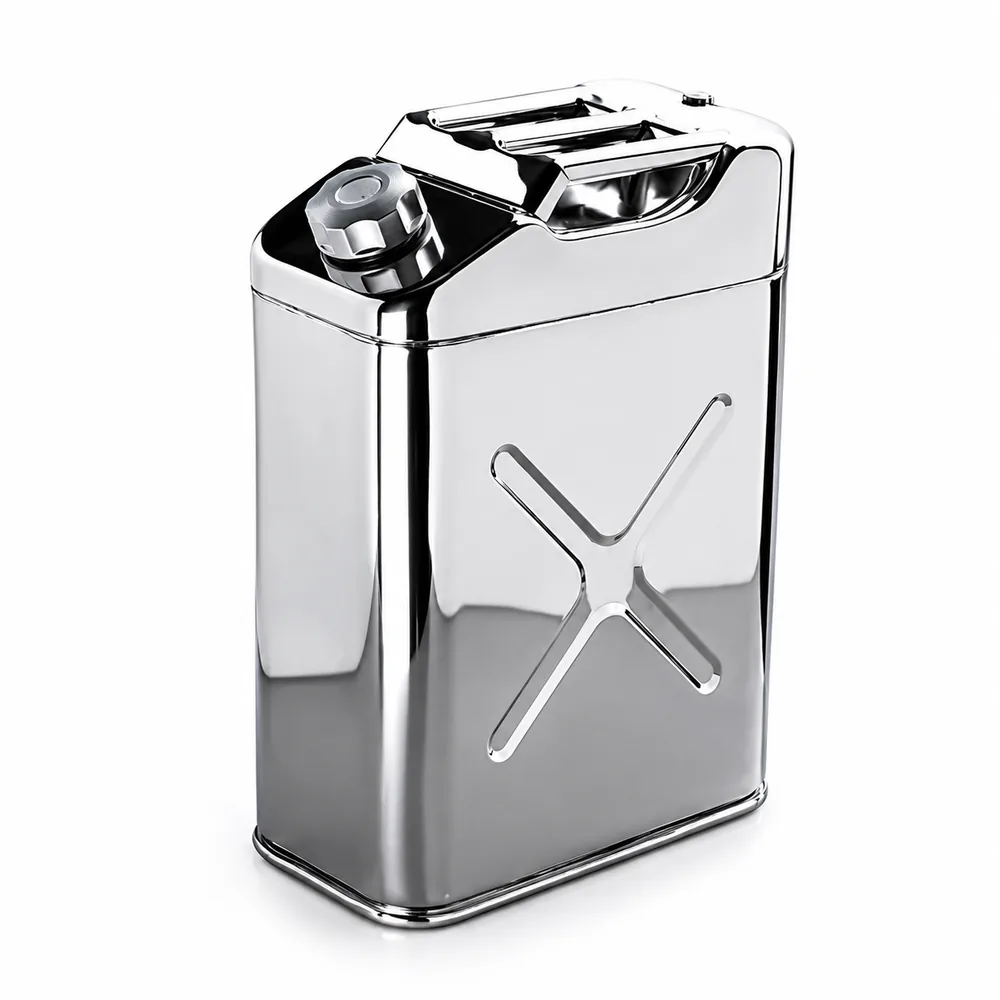 20L Stainless Steel Water Can 20L Stainless Steel Water Can |
AISI 304 stainless, cleans and reuses indefinitely. |
| A mixed emergency store | 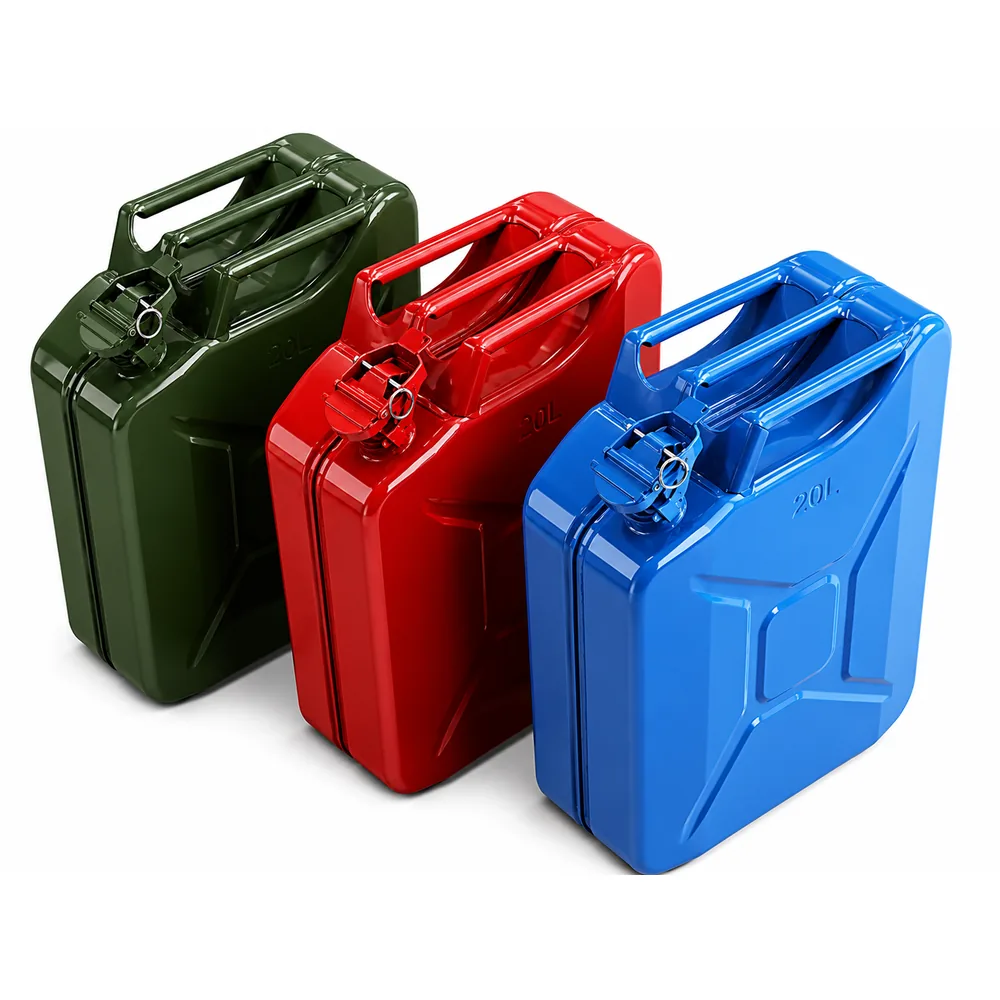 20L NATO Steel Water Can 20L NATO Steel Water Can |
NATO pattern, stacks and mounts beside fuel cans. |
| Ship-and-store at volume | 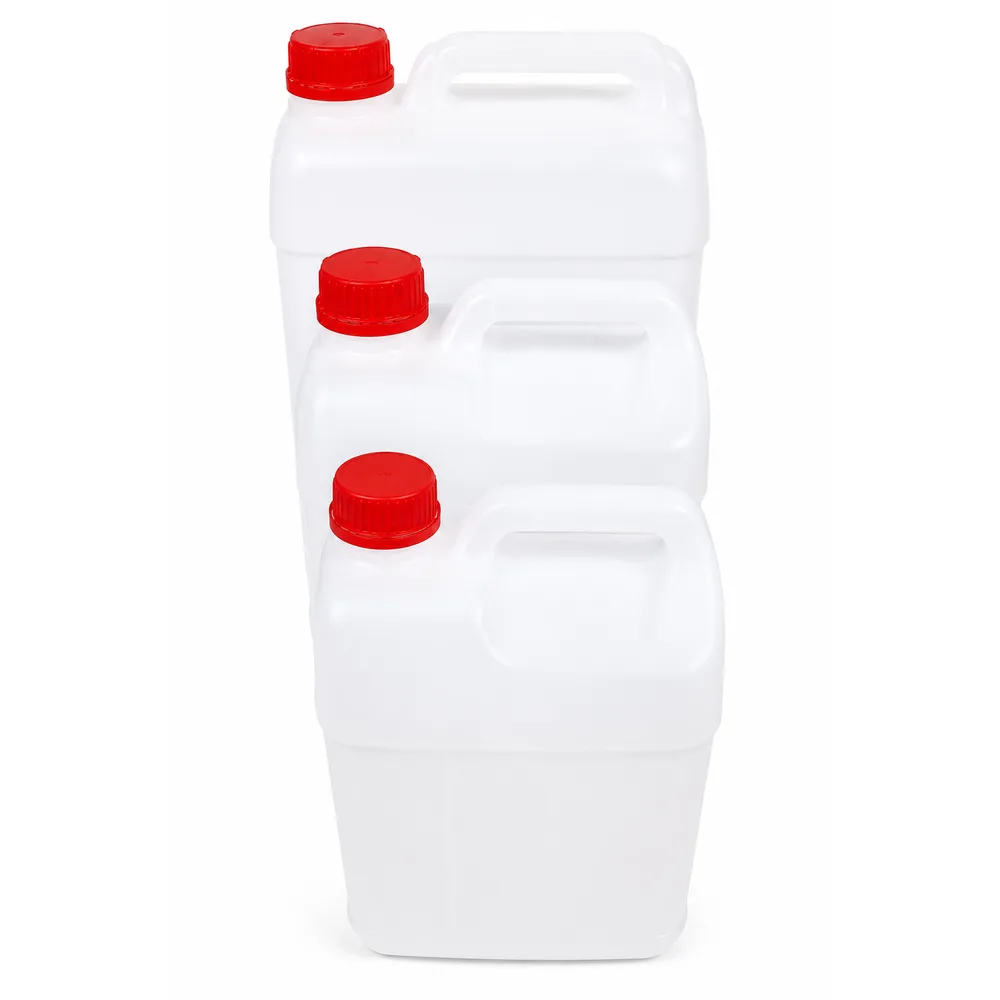 Food-Grade HDPE Jerrycan Food-Grade HDPE Jerrycan |
Food-grade HDPE, lighter and cheaper to distribute. |
| Drawing water without lifting | 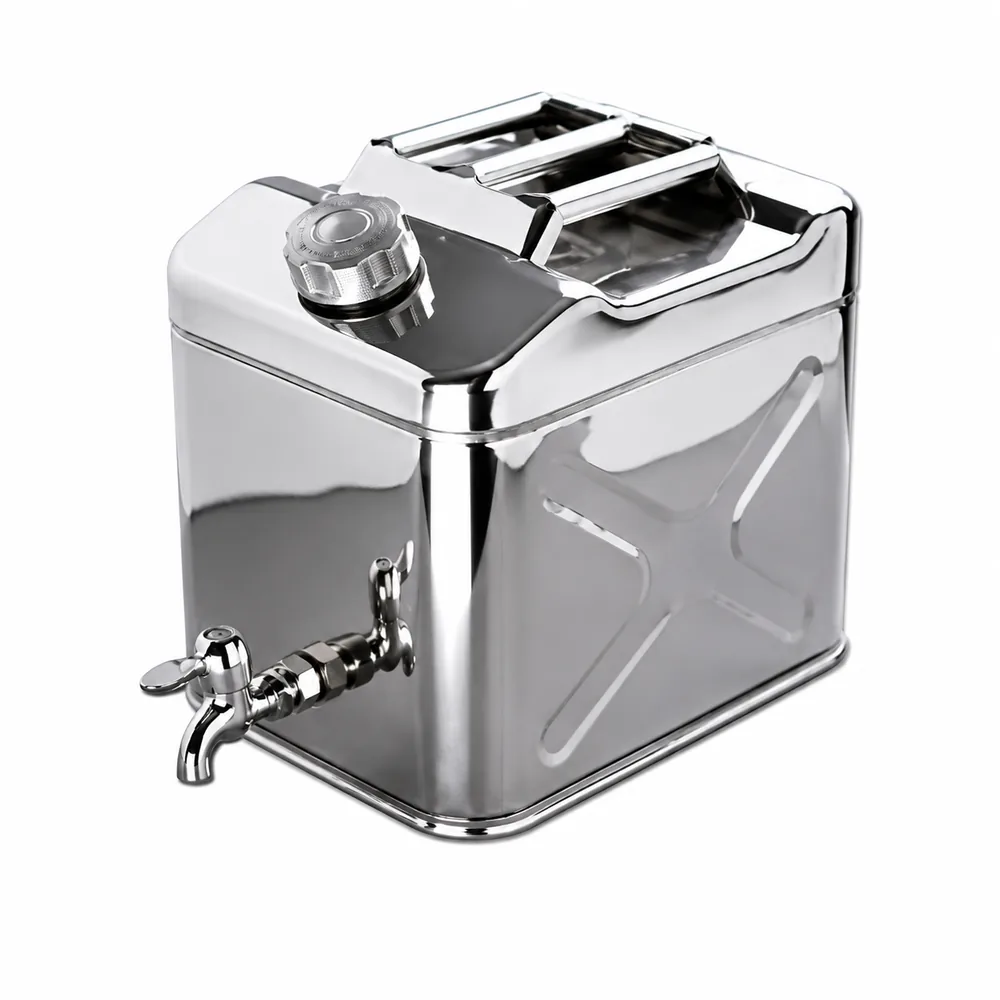 20L Stainless Dispensing Can with Tap 20L Stainless Dispensing Can with Tap |
Integrated tap for a static supply point. |
| A grab bag or vehicle kit | 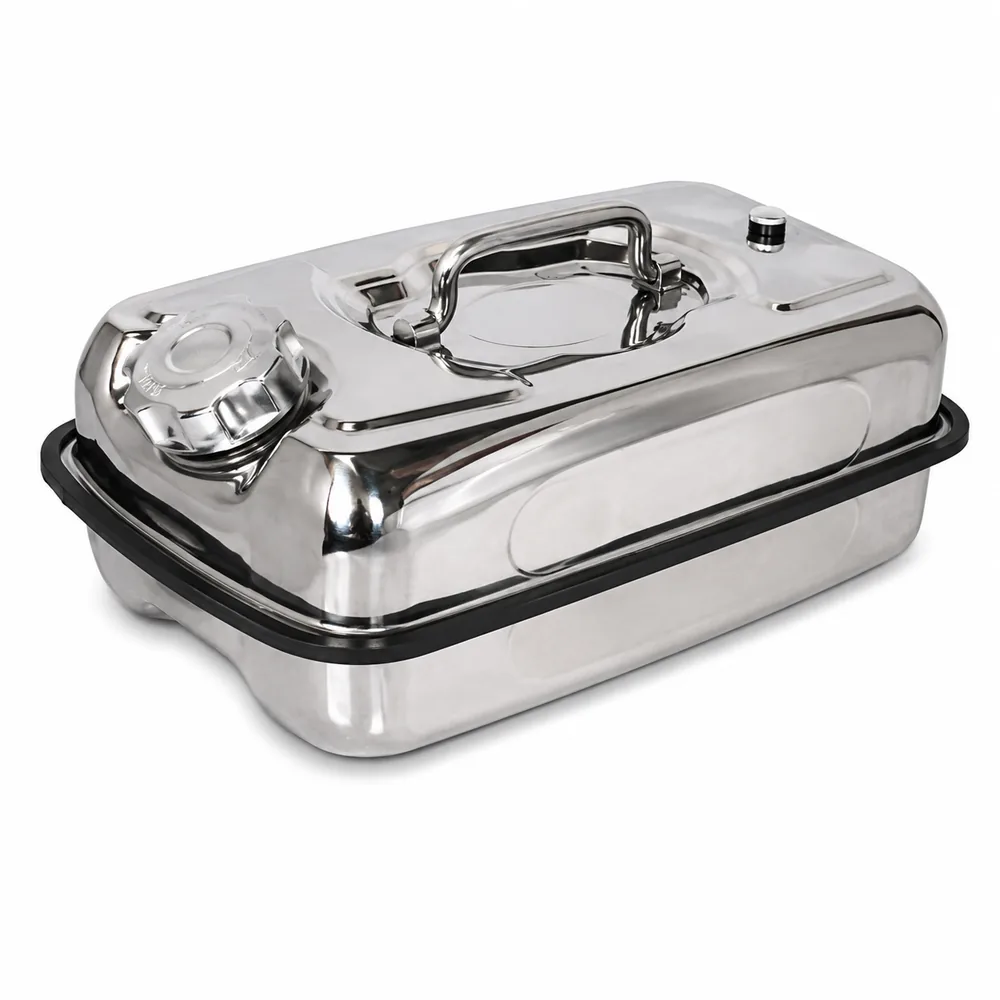 5L Stainless Steel Water Can 5L Stainless Steel Water Can |
A smaller reserve, one-hand carry. |