Both metals carry petrol, diesel, kerosene and JP-08, and both certify to a UN packaging code. So the fuel almost never decides this. Weight, toughness and cost do, and they usually point at one metal before you reach the bottom of the spec sheet.
Start with one question: is weight actually a constraint?
Aluminium is worth its premium for exactly one reason, and it is not durability or fuel performance. It is mass. Aluminium runs around 2.7 g/cm³ against roughly 7.85 for steel, close to a third the density, so an aluminium can is noticeably lighter empty than the steel can beside it. Full of fuel the gap narrows, because the fuel weighs the same in either body. Empty, and multiplied across a pallet or an airlift, the saving is real. If nobody on your side is counting kilograms, the decision is already made: buy steel and keep the difference.
Where the weight saving pays for itself
Aluminium earns its keep where payload is rationed. Aviation ground support and air-mobile defence units pay for every kilogram they fly. Overland and expedition builds carry fuel on roof racks and rear swing-outs, where weight sits high and works against the handling. Motorsport and recovery crews lift cans by hand all day. In those jobs the lighter can is the point, not a luxury. Outside them it is cost without a return.
Toughness: steel dents, aluminium can split
Steel is the forgiving metal. Drop a full steel can on a hard edge and it dents, and a dent still holds fuel. Aluminium is stiffer and less ductile, so the same abuse can crack it, usually at a seam or a weld where repeated flexing concentrates stress. A can bolted to a vehicle frame lives under constant vibration, and an under-specified or badly mounted aluminium body fatigues there first. Steel tolerates a decade of tailgates and wash-down bays. If the can will be thrown around, or mounted somewhere that shakes, steel is the safer body and the cheaper one.
The interior is where fuel cans actually fail
A steel fuel can is only as good as its internal coating. Bare steel rusts, the rust contaminates the fuel and blocks filters, so the wetted surface has to be lined for hydrocarbon service, and any lining is a part that can chip. Aluminium sidesteps the problem. It is inert enough against petrol, diesel and kerosene to run bare, with no liner to blister or flake into the tank. For a can that gets refilled for years that is a quiet advantage: one fewer thing to fail. It is also why the wrong interior, not the wrong metal, is the single most common defect in a cheap fuel can.
Corrosion, salt air and coatings
Aluminium grows its own oxide skin and re-grows it when scratched, so it needs no galvanizing and carries no paint to fail. On a boat or a coastal site, that self-repair is worth having. Steel has to earn its corrosion resistance with a zinc coat or a powder finish, and once that finish is breached the steel underneath begins to rust. Both last for years when they are looked after. Aluminium simply asks for less looking after.
Fuel compatibility
Neither metal is fussy about fuel. Both take petrol, diesel, kerosene and JP-08 without a material change. Neither is for strong acids, alkalis or aggressive cleaning chemicals, and aluminium in particular should be kept to fuels and inert liquids rather than pressed into general chemical duty. If you are moving anything other than hydrocarbons, confirm the exact liquid with us before you assume the metal will hold it.
Cost, and what the premium actually buys
Aluminium costs more per can, in the metal and in the forming. The premium buys weight reduction and nothing else. It does not buy a tougher can, a longer fuel life or an easier certification. The common and expensive mistake is to read “aluminium” as “better” and pay for it on a job that never leaves the ground, where a coated steel can does the identical duty for less. Buy aluminium when a spreadsheet somewhere counts the kilograms. Buy steel when it counts the cans.
Compliance: 3A1 versus 3B1
Both metals certify for dangerous-goods transport. In a UN packaging marking a steel jerry can reads 3A1 and an aluminium one reads 3B1, where 3 is the jerry can, A is steel and B is aluminium, and 1 is a non-removable head. The approval belongs to a specific design made at a specific plant, proven by drop, stack, leakproof and pressure tests, so ask for the certificate and test report for the exact can you are buying rather than a generic claim. Our guide to UN packaging codes walks through the full marking.
| Factor | Aluminium | Galvanized steel |
|---|---|---|
| Empty weight | About a third lighter | Heavier |
| Impact behaviour | Stiffer, can crack at seams | Dents, keeps holding |
| Interior | Runs bare, no liner | Needs a hydrocarbon-service coating |
| Corrosion | Self-passivating, no coating | Needs galvanizing or paint |
| Vibration and mount duty | Fatigues if under-mounted | Very tolerant |
| Unit cost | Higher | Lower |
| UN code | 3B1 | 3A1 |
| Best for | Payload-critical: aviation, overland, marine | Field and industrial duty at lower cost |
Where Fortitude21 fits
We build the 20L Aluminium NATO Can for weight-critical loads, and a full steel fuel range for everything that values toughness and price over mass. Both share the NATO pattern, so they seat in the same carriers and racks. Tell us whether your load counts kilograms or counts cans, and we point you at the metal that lands cheapest against the job. If you are weighing materials more broadly, our guide to choosing a jerry can starts one level up.
Match the can to the job
The material decision points at a can. Here is where each one sits in our line, from fuel through water.
| Your use case | Recommended can | Why this one |
|---|---|---|
| Fuel, where weight is the constraint |  20L Aluminium NATO Can 20L Aluminium NATO Can |
The lightest body, for airlift, overland and motorsport. |
| Fuel, field and general duty | 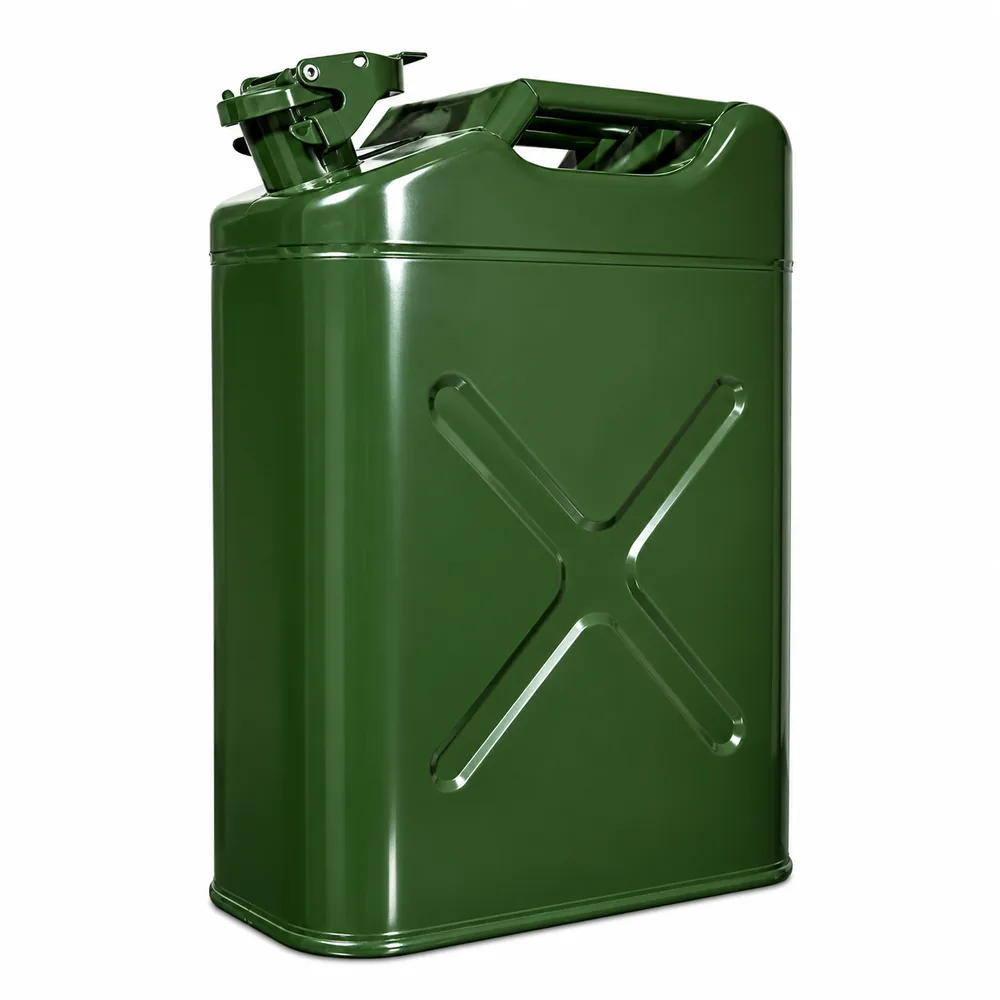 20L NATO Steel Fuel Can 20L NATO Steel Fuel Can |
The NATO steel workhorse: tough, internally coated, UN-marked. |
| Fuel, at a fixed refuelling point | 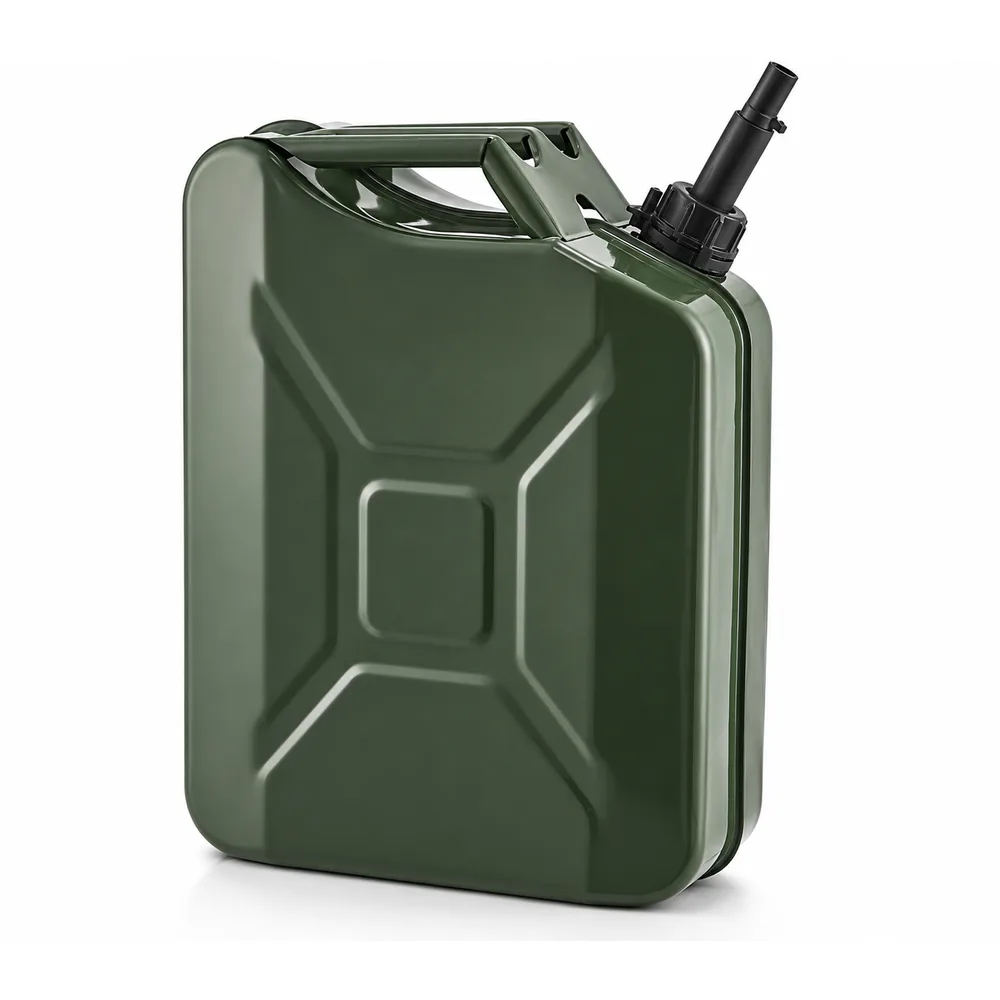 20L Steel Fuel Tank with Spout 20L Steel Fuel Tank with Spout |
Stands and pours through a tap, for the bench or the yard. |
| Fuel, lying flat under a seat or locker | 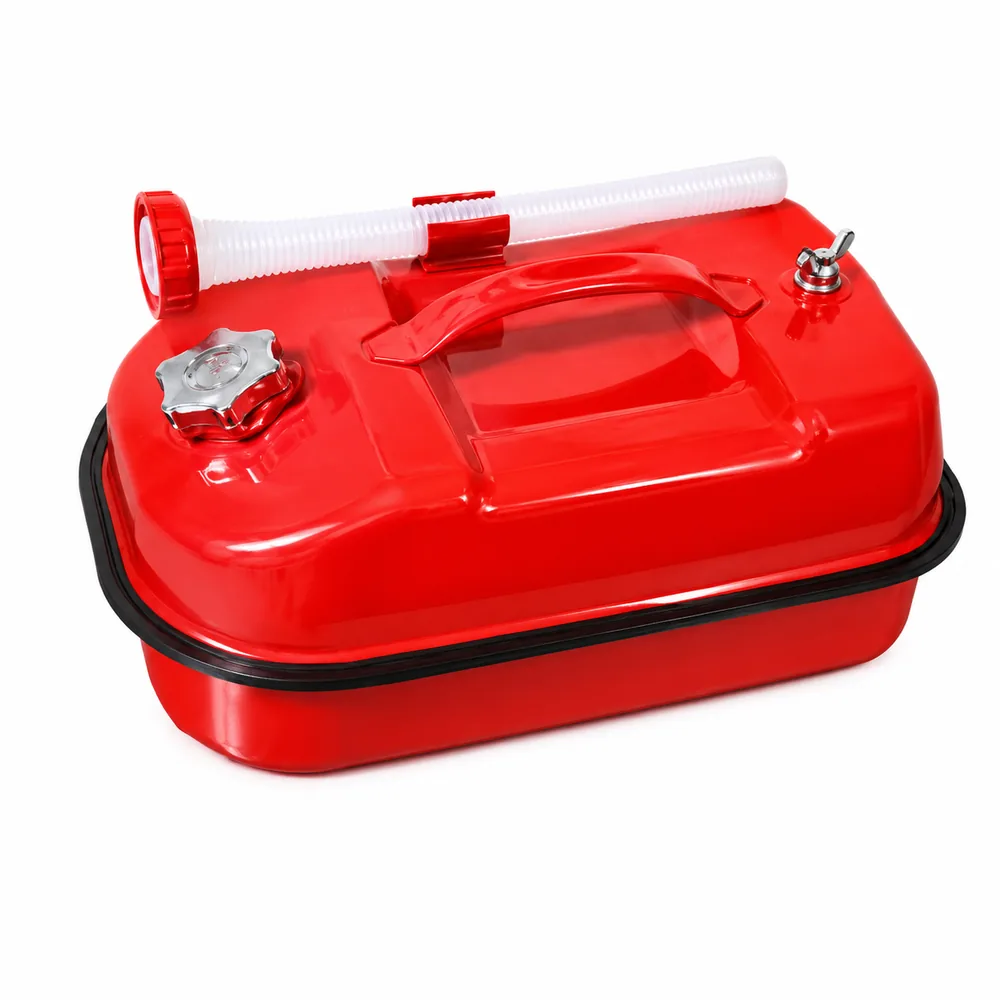 Horizontal Galvanised Can — 5L / 10L / 20L Horizontal Galvanised Can — 5L / 10L / 20L |
Low-profile galvanised, for boats, ATVs and machine frames. |
| Potable water or food-grade liquids | 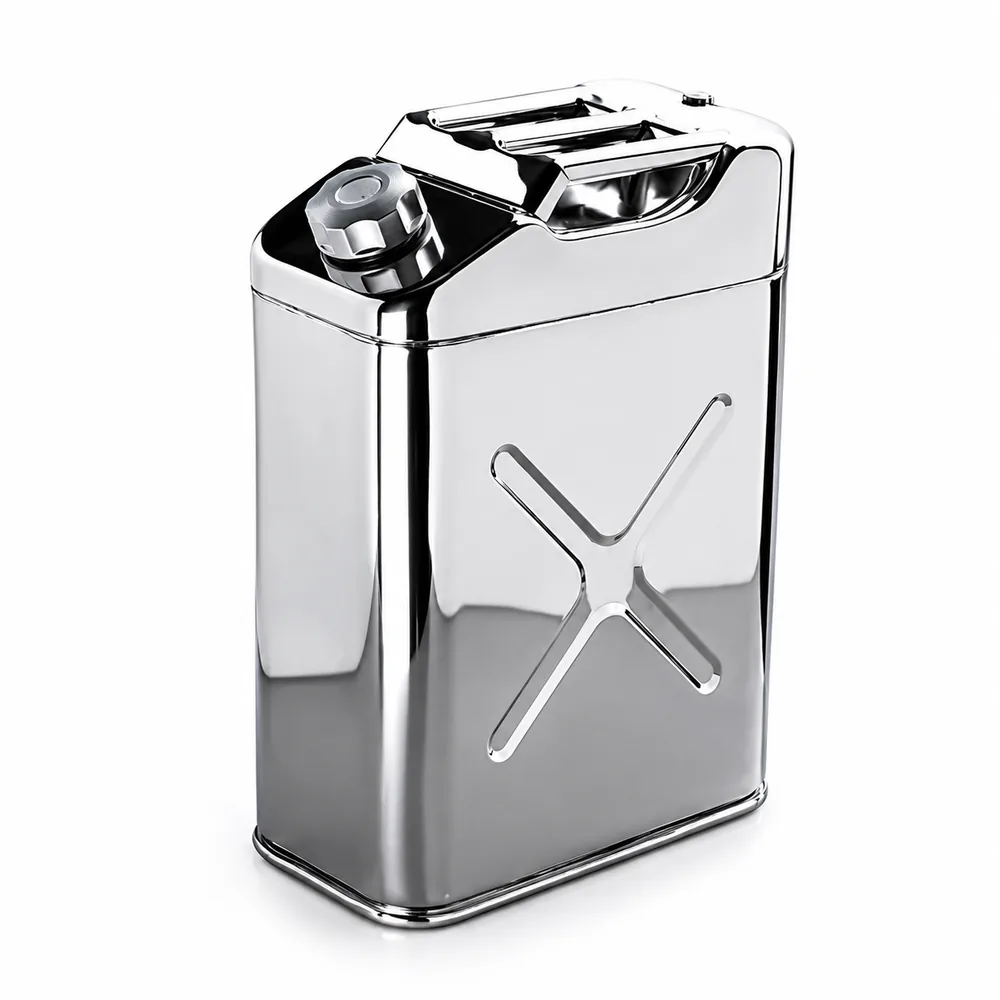 20L Stainless Steel Water Can 20L Stainless Steel Water Can |
AISI 304 stainless across the wetted path, no liner to fail. |
| Oil and workshop fluids | 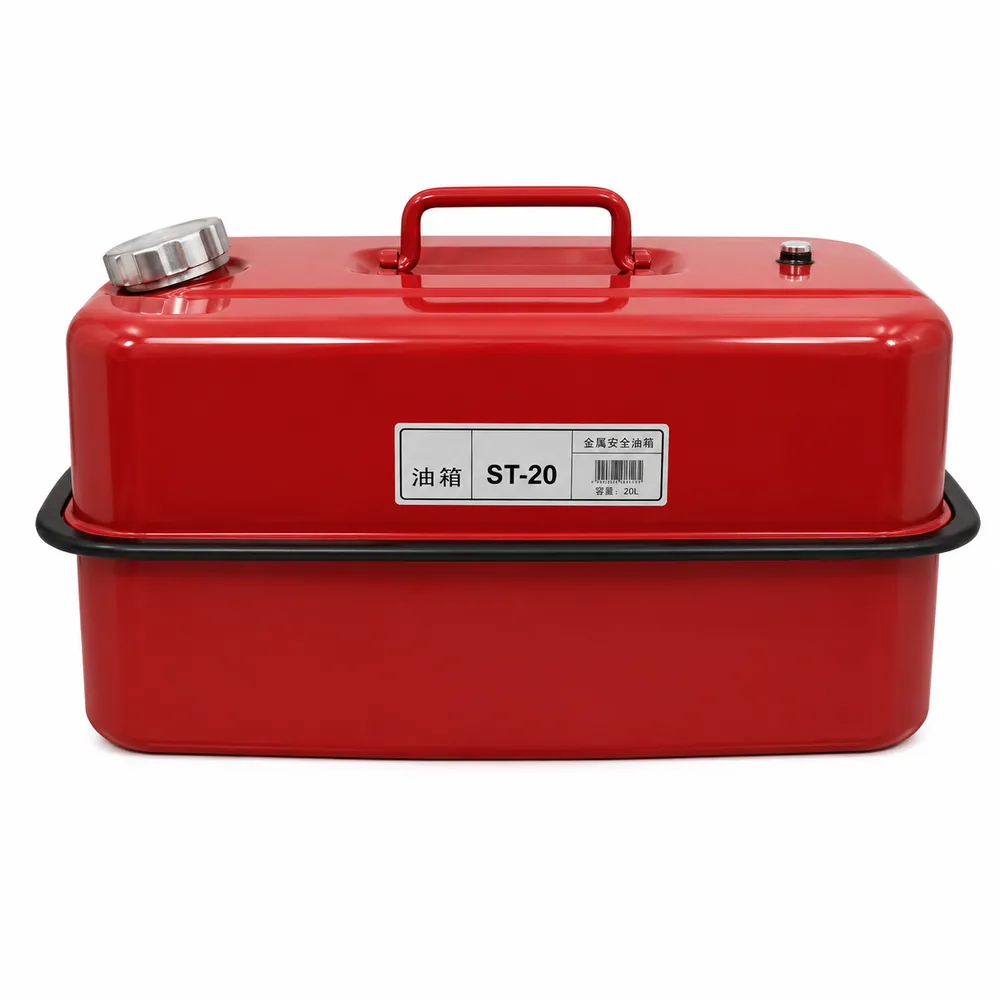 20L Steel Oil Tank 20L Steel Oil Tank |
Upright steel, built to decant lubricants and oils. |
| Industrial chemicals at pallet volume | 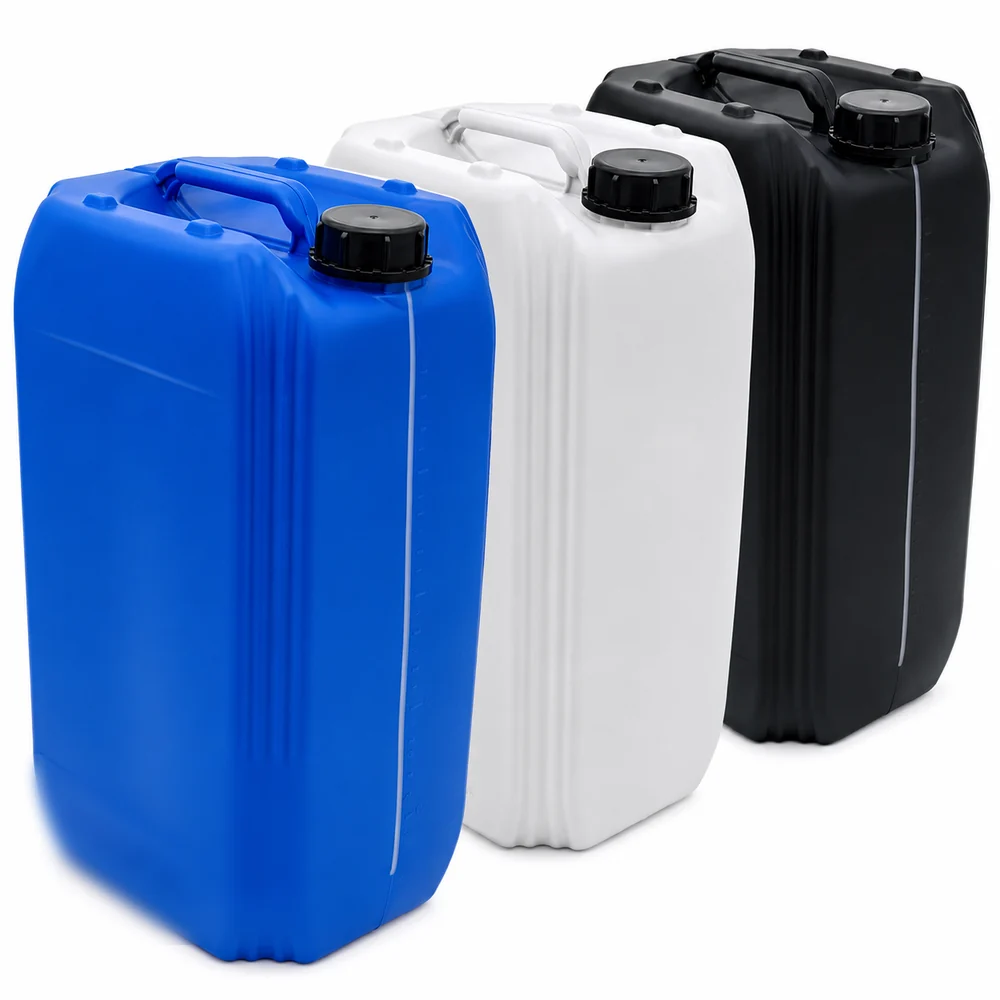 25L Stackable Plastic Jerrycan 25L Stackable Plastic Jerrycan |
Stackable UN-rated HDPE for decanting and distribution. |